My work connects the layers that make AI useful: the context it sees, the tools it can use, the rules it follows, and the product people actually experience.
01 / Context
Memory & retrieval
Structured indexes, embeddings, reranking and durable conversational memory.
02 / Agency
Agents & orchestration
Tool execution, model routing, distributed sessions and human control.
03 / Creation
Multimodal production
Code, generated art, 3D assets and authored systems brought into playable worlds.
04 / Delivery
Products & operations
Local inference, private hosting, tests, installers, signed updates and recovery.
The portfolio
Explore the work.
Nine projects and game editions. One connected practice.
Orchestrating agents, connecting context and running models are engineering disciplines. These are the systems I built to put them to work.
01Agent orchestration
Agent orchestrationIn daily use
Nova Fleet
An operating console for a distributed AI workforce.
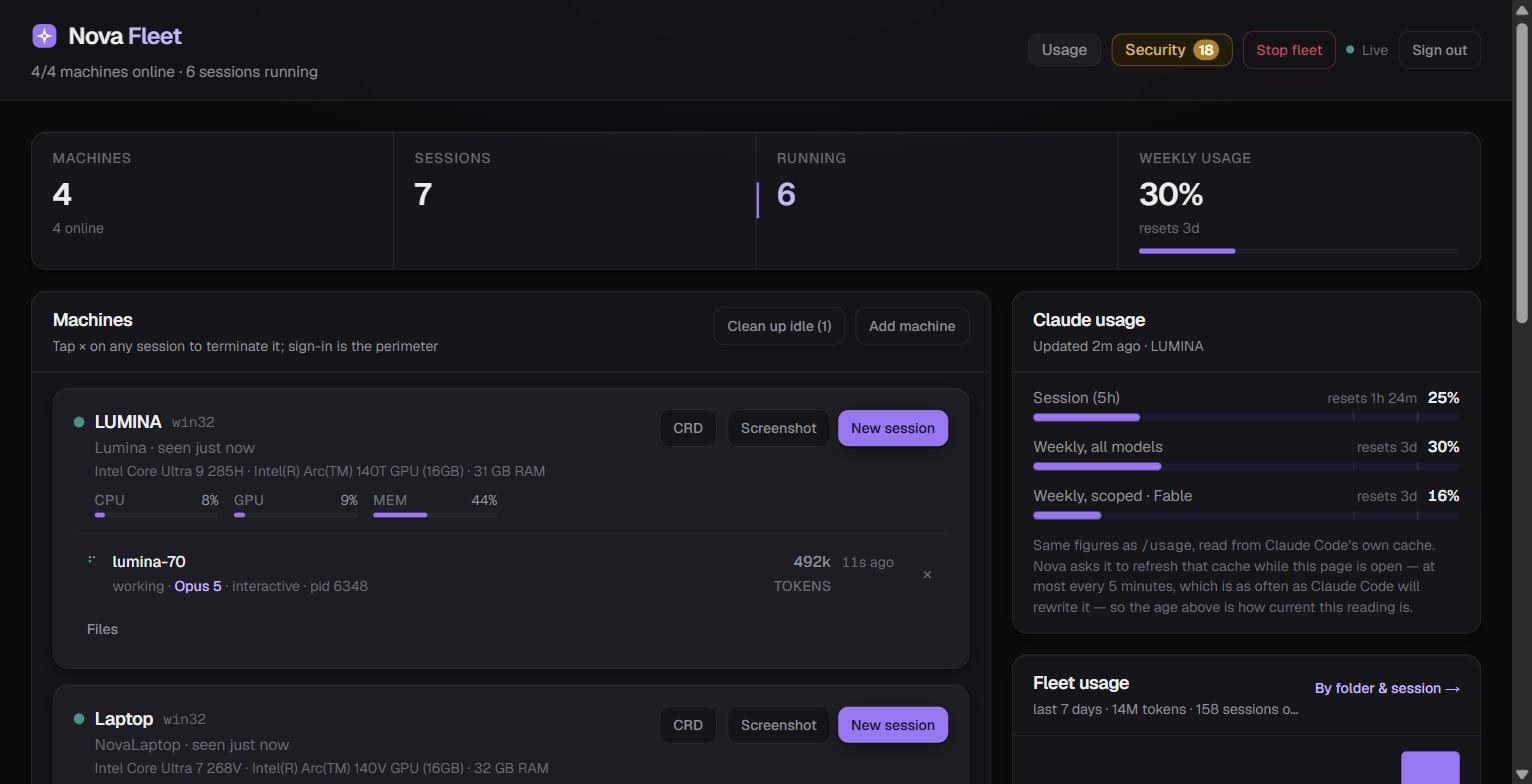
The control plane for a fleet of coding agents running across every machine in the studio. Live transcripts, model routing, hardware telemetry and spend — with a kill switch that stops the fleet without killing the daemons that would let you start it again.
The AI expertise
Building the system around the model: remote execution, observability, permissions, intervention and recovery.
Multi-machine sessions · live transcripts · model routing · usage accounting
A real session cockpit
live transcript, the question a blocked session is parked on, prompt sends, model routing and kill — for every machine at once.
One command to induct a machine
an enroll code mints a per-OS bootstrap script that installs the agent, registers autostart, and reports in.
Telemetry on every heartbeat
CPU, GPU and memory per machine — with memory read the way the OS actually means it, not the number that is wrong on macOS.
A kill switch you can undo
stopping the fleet terminates every session but leaves the daemons alive and reporting, so the one job they keep is noticing the switch flip back.
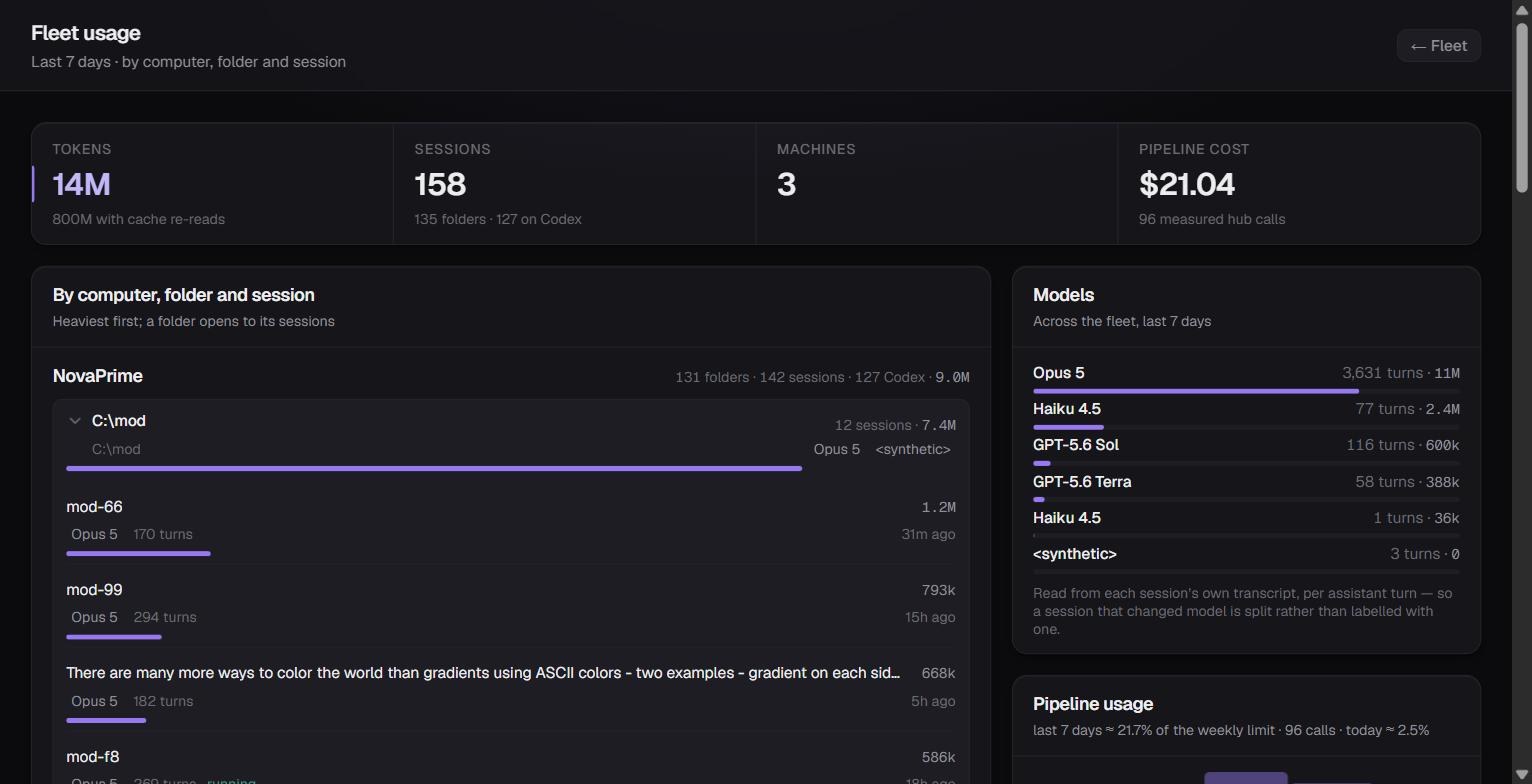
Usage by computer, folder, then session
tokens as the honest unit for subscription work, dollars only where calls are really priced — and the two are never summed.
An auditor that cannot edit
the on-demand security review runs with an exclusive three-tool whitelist, so it can read the trust boundary it is judging and nothing else.
Project status Deployed studio infrastructure. Screenshots show the working interface; sensitive details are redacted.
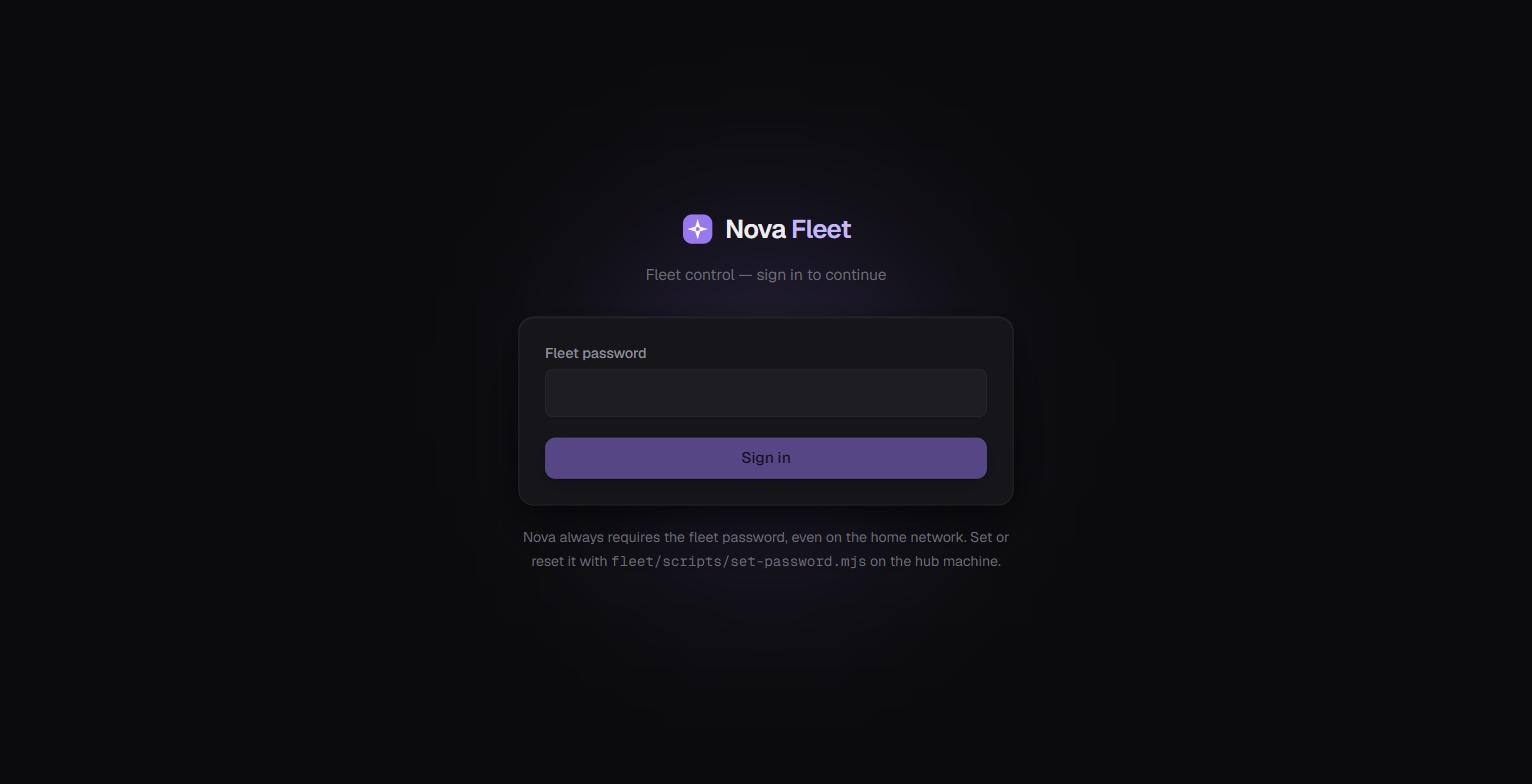
Usage — computer, then folder, then sessionSign-in is the perimeter — no LAN bypass, ever
02Applied AI
Context & synthesisIn daily use
Lumina
Personal context, turned into useful action.
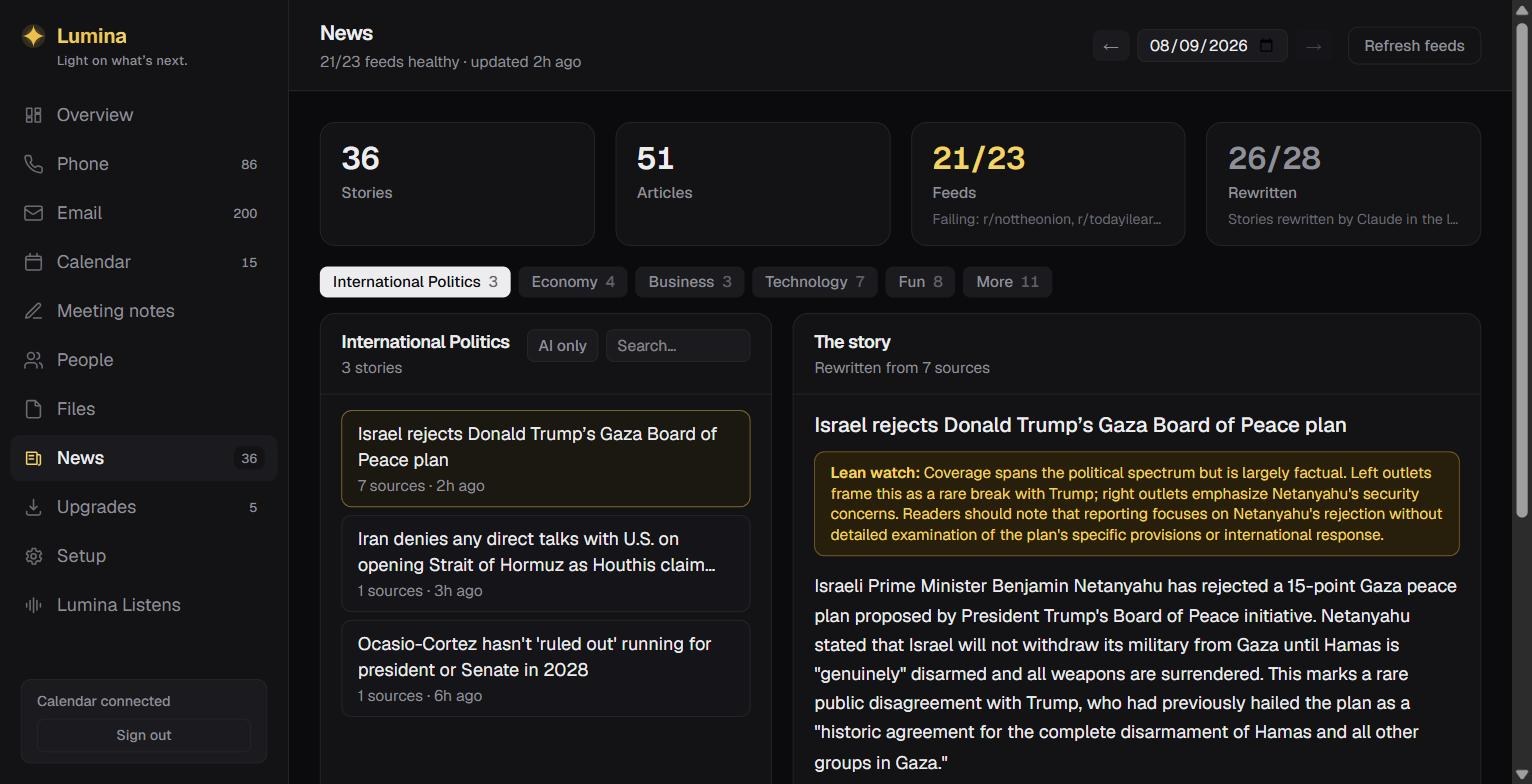
A private hub that reads your calendar, mail, texts and files overnight, then tells you what actually matters before you walk into the room. Briefs are synthesized from real correspondence — not templates — and the recommended actions are mined from the same pass.
The AI expertise
Designing an AI product end to end: ingestion, context selection, model routing, synthesis and a useful human interface.
Calendar, mail, messages and files feed the context used to prepare meeting briefs and suggested actions.
A model for the job
Separate workload tiers handle classification, research and deeper synthesis, with explicit engine selection.
Distill once, reuse
Versioned summaries avoid repeatedly sending full source material through expensive synthesis.
Beyond a chat window
Scheduled curators, call notes, research, playbooks and action missions turn intelligence into daily workflows.
Project status Deployed personal hub with scheduled curation and Codex/Claude engine integration. Screenshots are redacted.
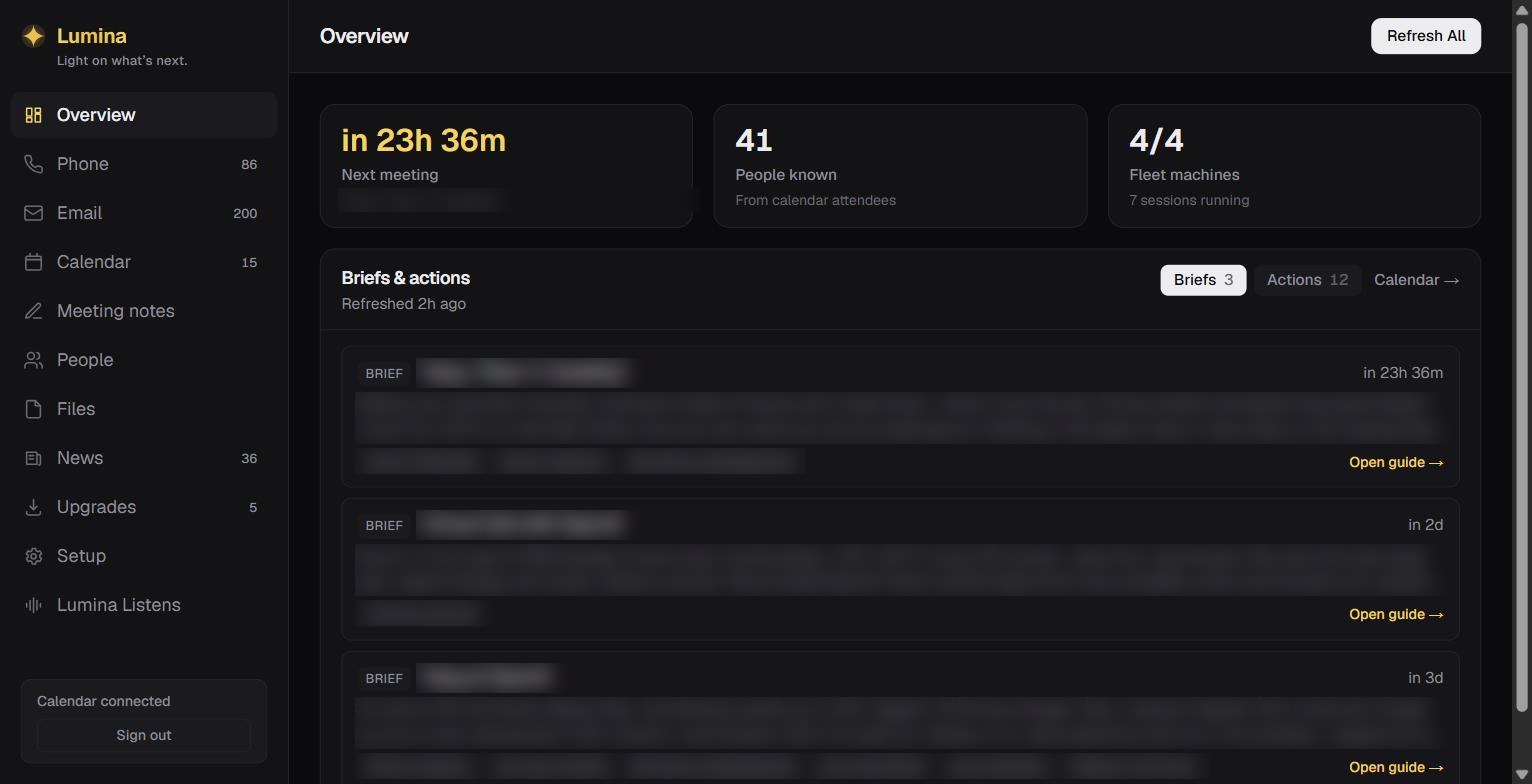
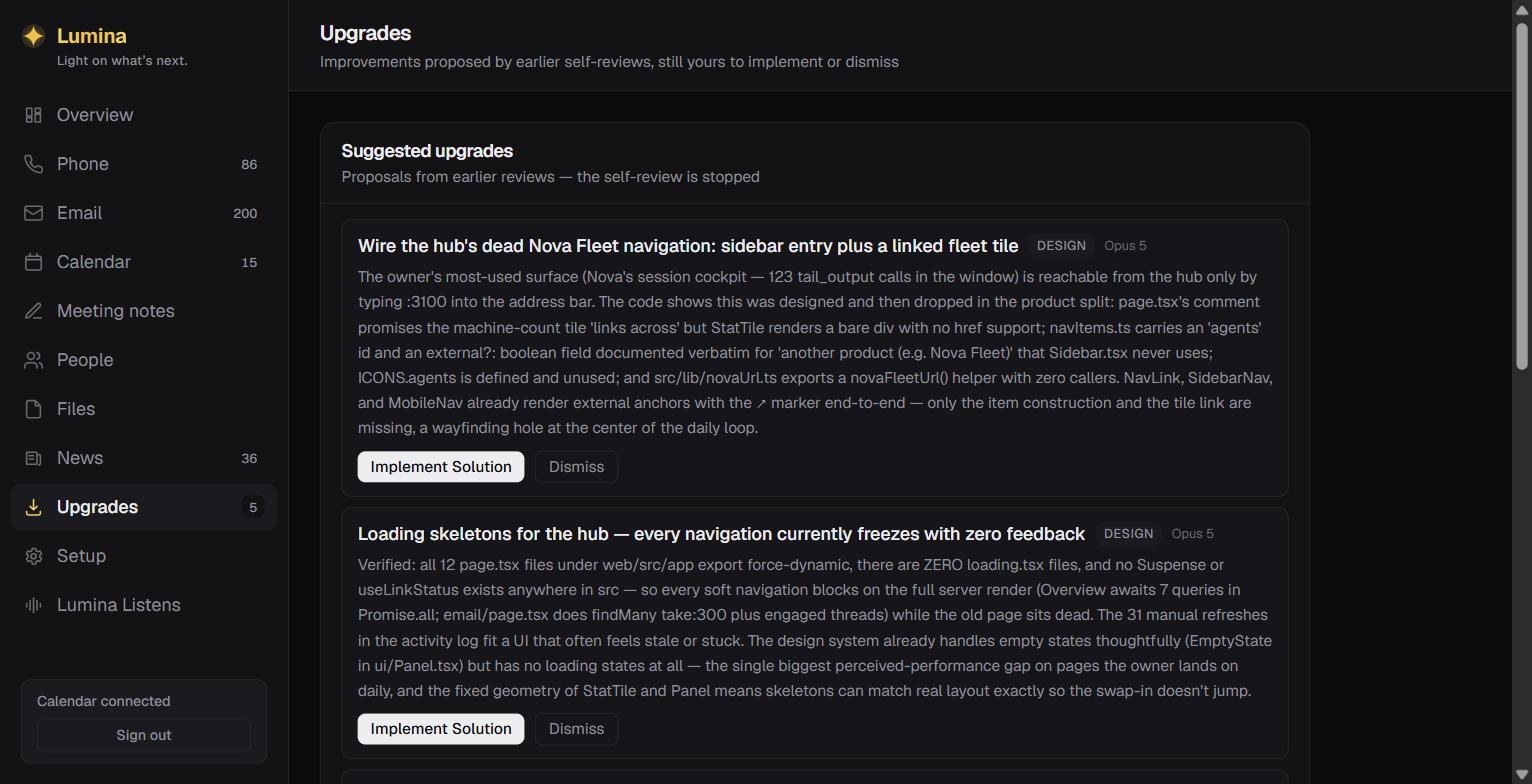
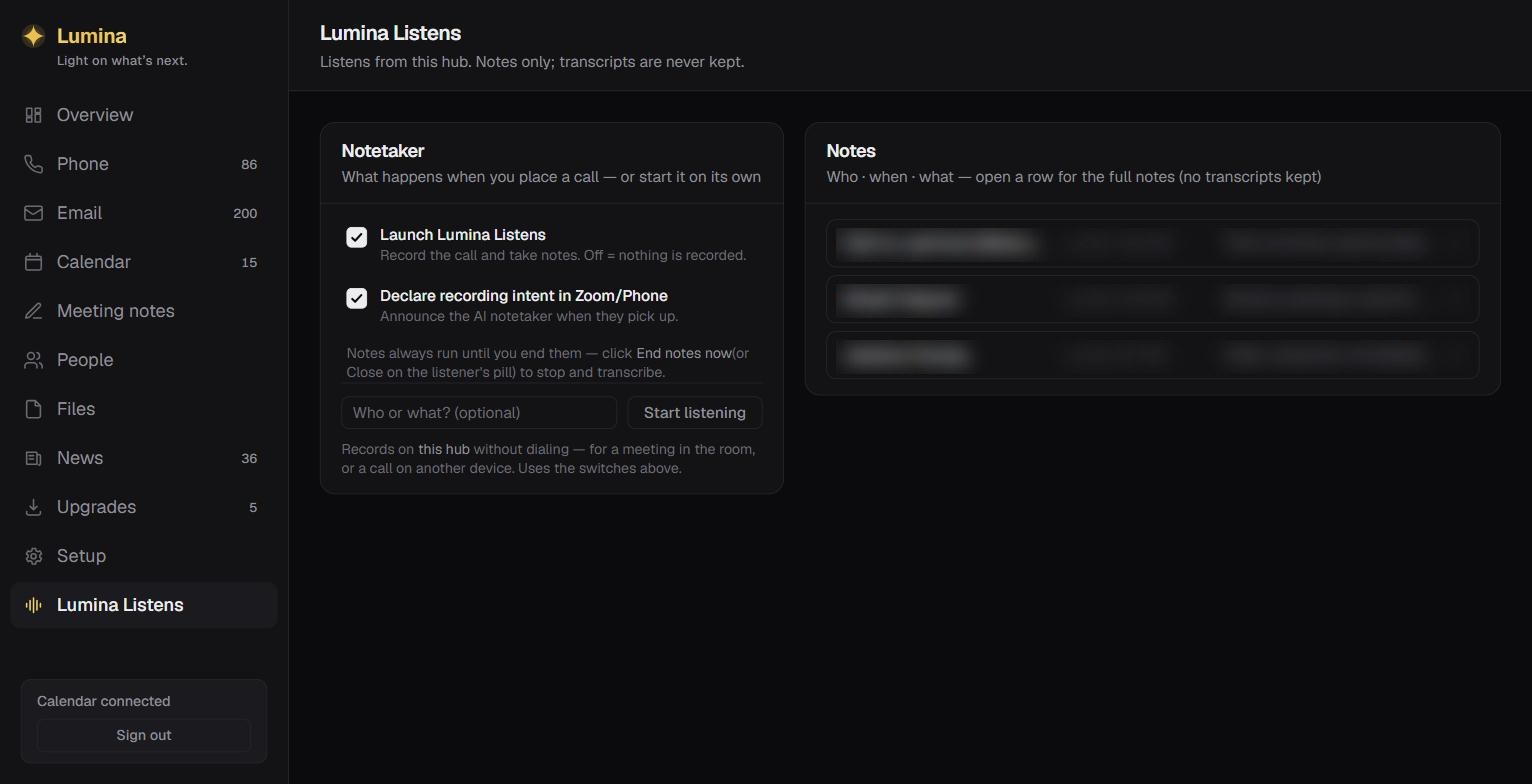
Overview — briefs and actions (personal data blurred)Upgrades — the app reviewing itselfLumina Listens — notes only, never transcripts (names blurred)
03Local AI
FuCode + FuChatWindows application
FuAI
A local AI stack for code and conversation.
A local-first Windows AI application with two distinct experiences: FuCode works with repositories and terminals; FuChat provides conversation, account-private memory and source-backed research. The surrounding system gives models useful context, durable sessions and explicit control over files and actions.
The AI expertise
Engineering below the chat interface: inference, context budgets, embeddings, reranking, tool execution, memory and evaluation.
SQLite/FTS5 indexes, local embeddings and a reranker connect questions to relevant code and archived conversations.
Edits with a recovery path
Atomic multi-file patches, a session diff and content-addressed rollback make model-driven changes inspectable and reversible.
Bounded context, durable history
Context compaction, repository maps and a memory atlas preserve continuity without loading every past turn into each prompt.
Project status Windows application in active development, previously called FuLlama.
02 / Intelligence meets imagination
Worlds worth getting lost in.
Game development brings the whole workflow together: systems design, code, art, simulation, tools and relentless iteration.
043D worlds
MOD2 · CrysonaActive development
Mists of Destiny — 3D
From a world of words to a world you can walk through.
Mists of Destiny is growing from a text world into Crysona, a place you can explore in 3D. A playable Godot client established the graphical experience; current Unreal Engine development takes the next step with fully 3D environments and characters. The online foundation uses a Node server with SpacetimeDB persistence.
The AI expertise
An AI-assisted production workflow spanning world design, programming, generated materials, 3D assets, engine integration, testing and distribution.
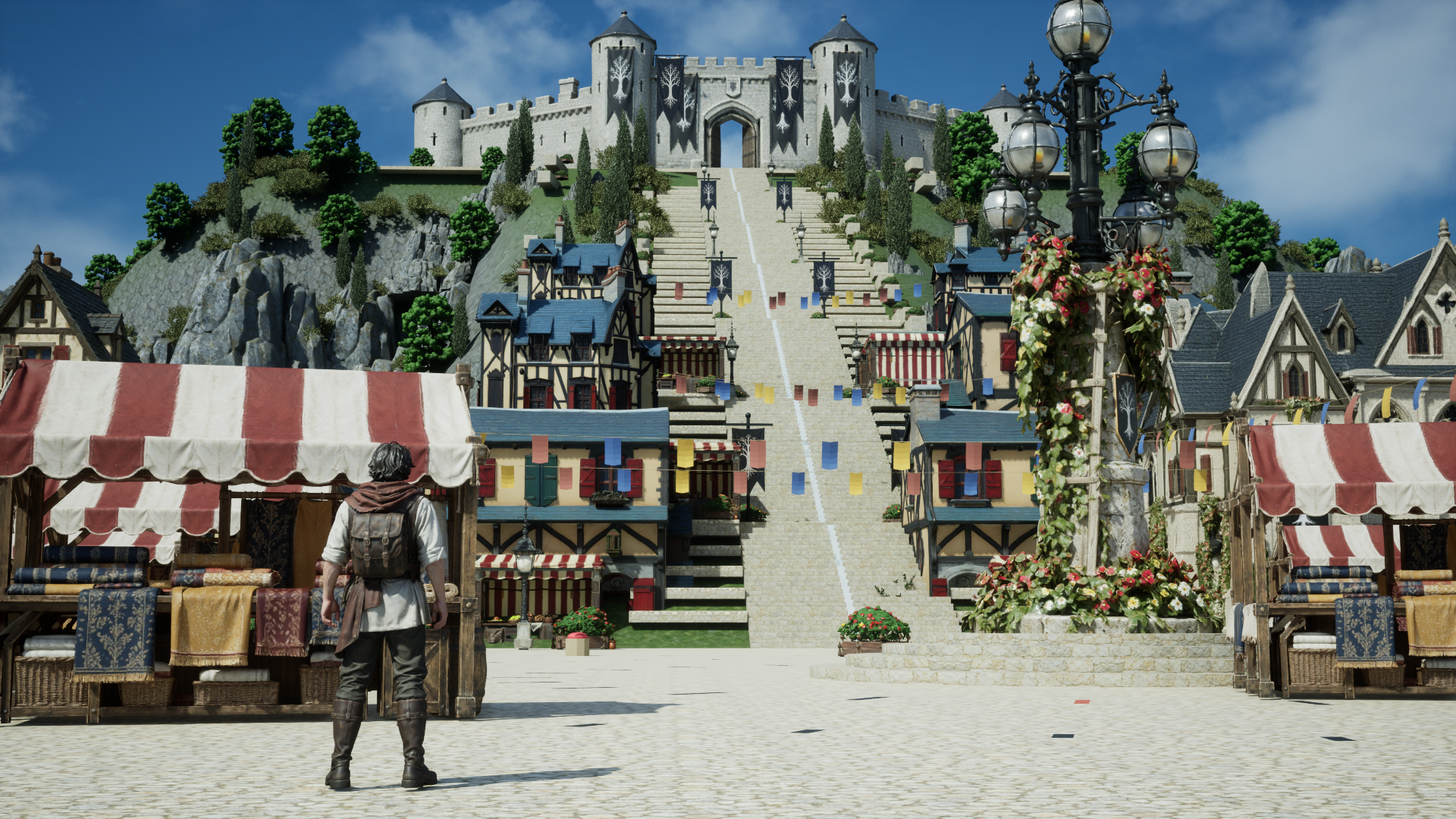
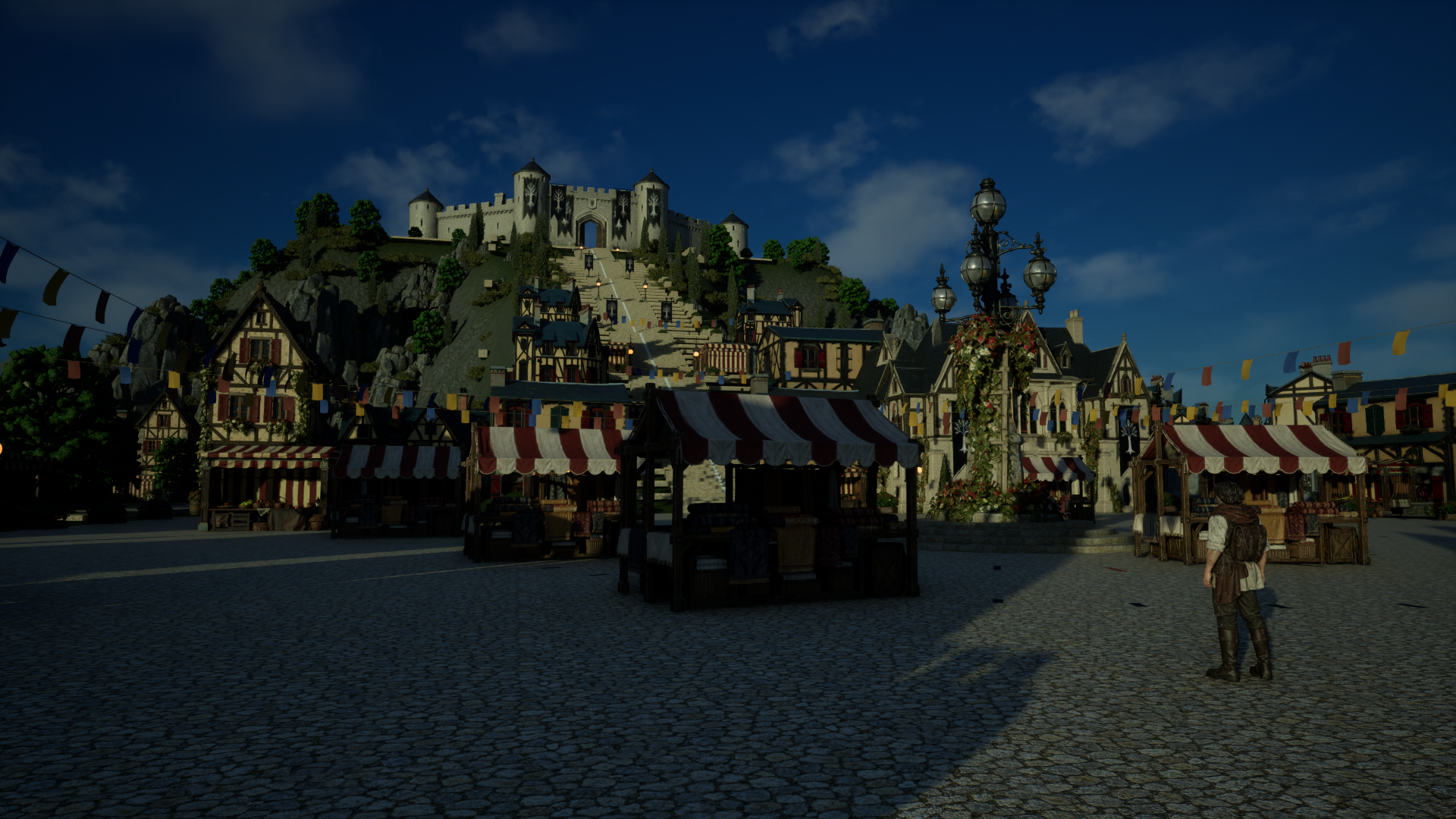
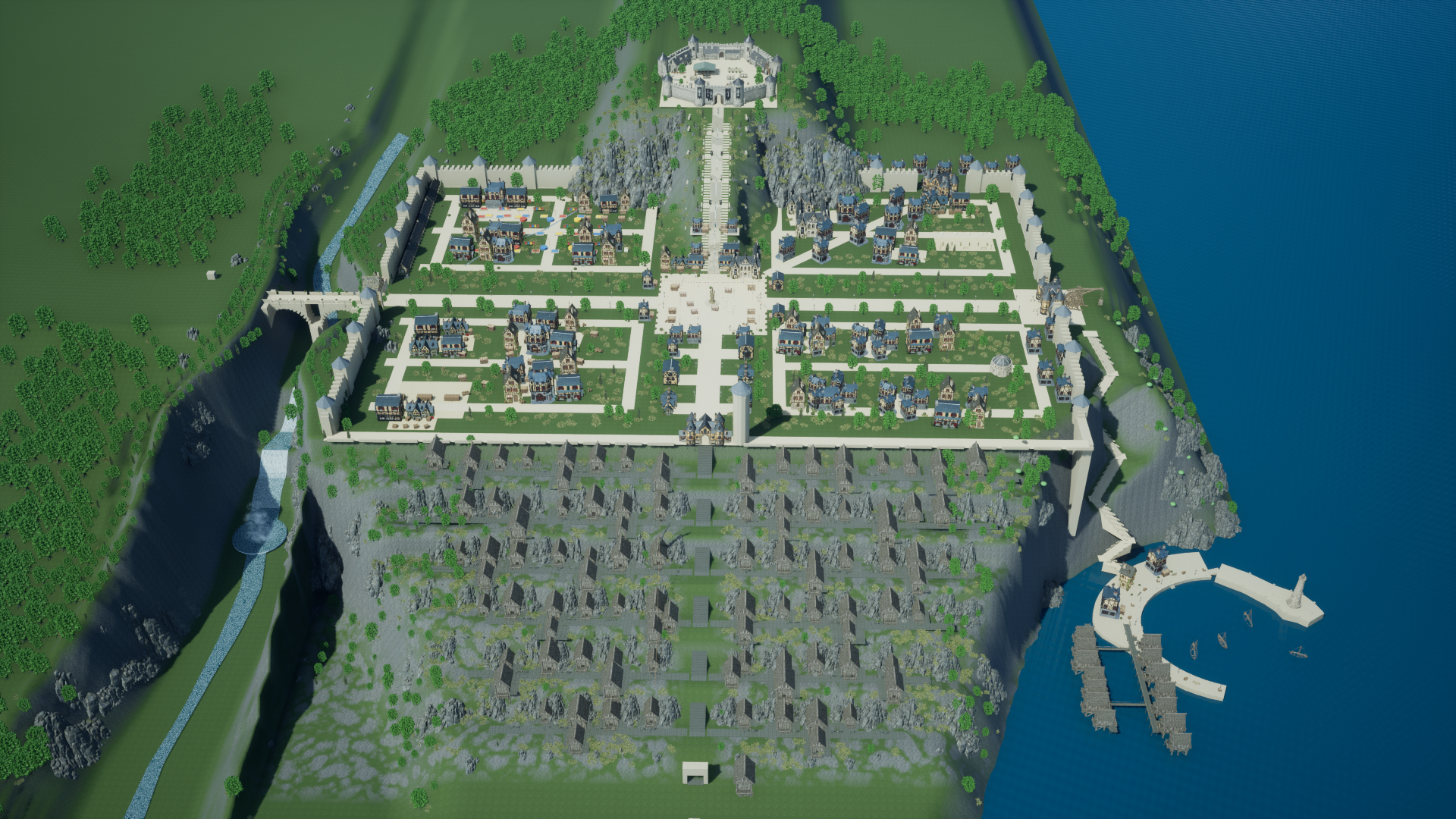
The Unreal town demo explores Miradon through fully 3D architecture, streets, atmospheric lighting and an evolving character pipeline.
From generated assets to a world
Meshy and Blender work feed engine-ready assets, with material, collision and visual checks connecting the art pipeline to the game.
Gameplay with a foundation
The existing Godot client and authoritative online service underpin the transition. Engine migration is ongoing, with feature parity tracked explicitly.
Project status Current Unreal Engine development, shown in September 22 captures. The Godot client remains playable; Unreal gameplay parity and visual refinement are in progress.
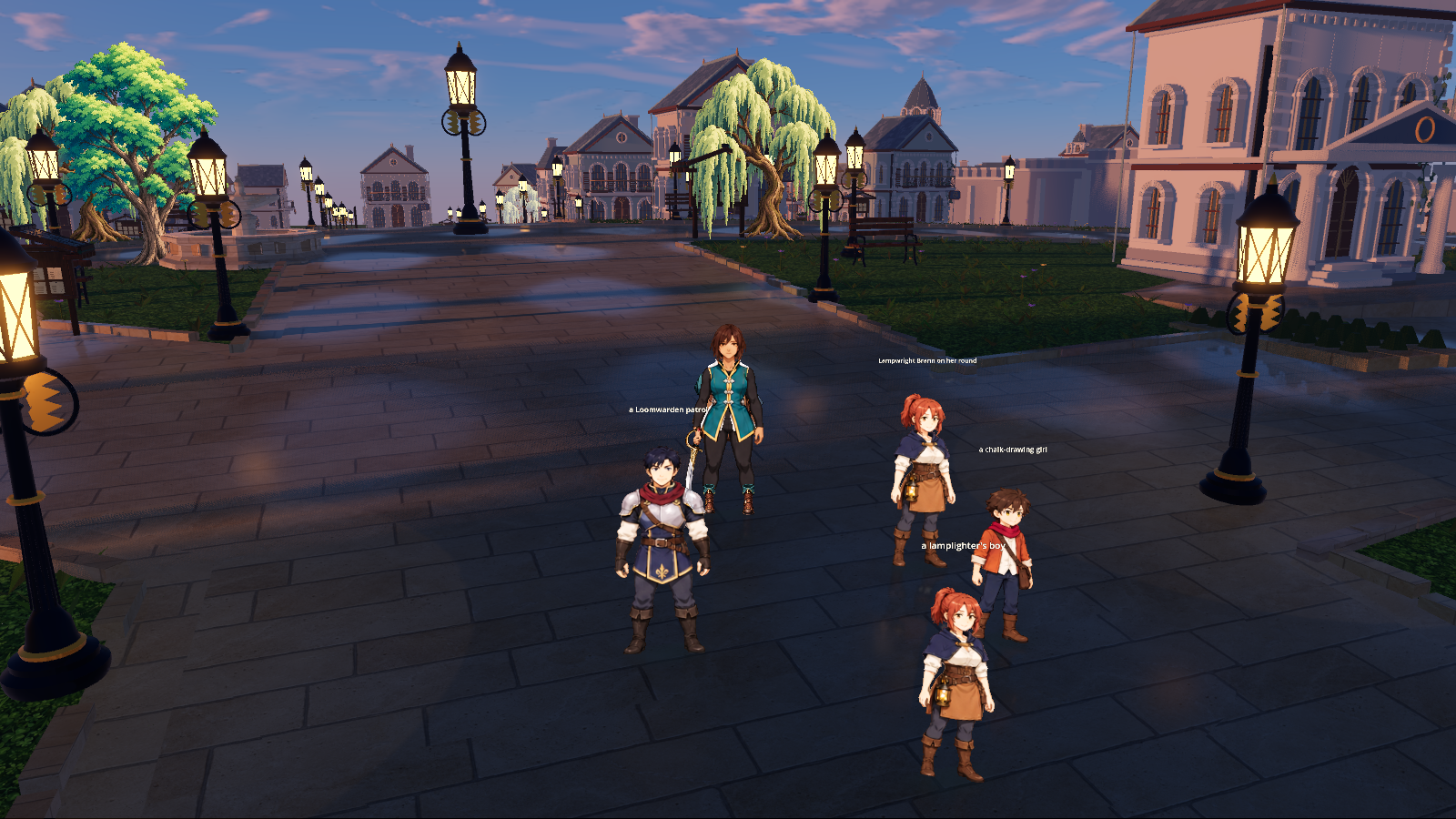
Unreal development, September 22: Lamplight Square in the dusk lighting pass.Unreal development, September 22: Miradon’s districts, castle, walls and harbour from above.The earlier Godot chapter: illustrated characters in a 3D town. A step in Crysona’s evolution.
05AI characters
Original text gameHistorical foundation
Mists of Destiny — Text
A living world, written one command at a time.
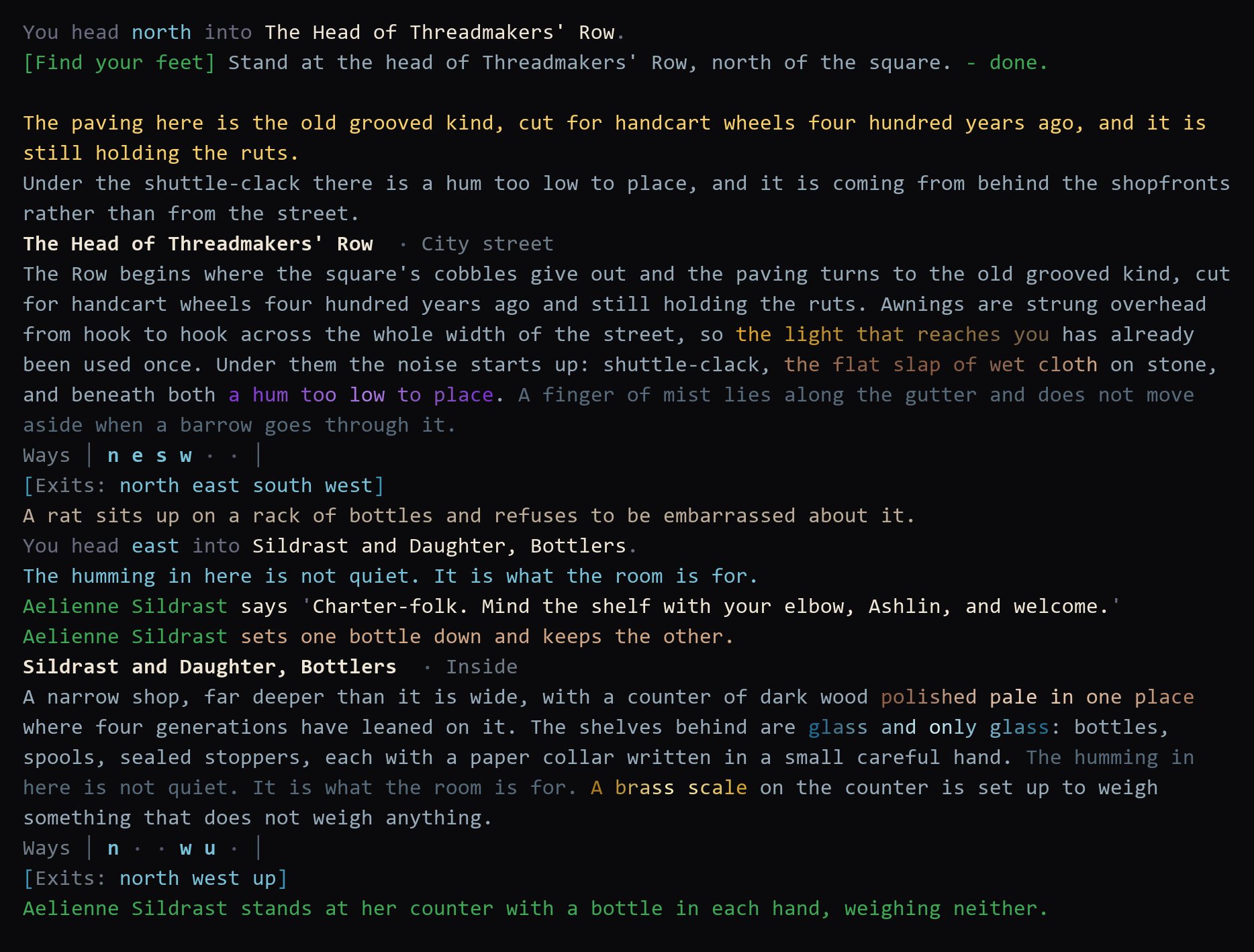
A classic MUD rebuilt in modern JavaScript, with a browser client and a richly authored world. Its artificial players carry personalities, persistent memory, goals and relationships. Their actions pass through the same command interpreter as a human player’s, grounding AI decisions in the game’s actual rules.
The AI expertise
Hybrid cognition: inexpensive utility logic for routine behaviour, language models for meaningful moments, and explicit cost limits.
45 areas · 1,965 rooms · 33 authored AI personas in the current content catalog
Characters with continuity
33 authored personas bring drives, quirks, memory and relationships to the world. They explore, talk and act through the same command interpreter as human players.
A cognition ladder
Utility logic handles routine behaviour locally. Salient moments escalate to language models for conversation or consequential choices, with call and spend limits.
A substantial authored world
The current catalog contains 45 areas, 1,965 rooms, 1,088 creature prototypes, 2,627 object prototypes, 281 quests and 244 skills.
Project status Original text alpha, currently offline. Its world and AI systems are preserved as the foundation for the active 3D project.
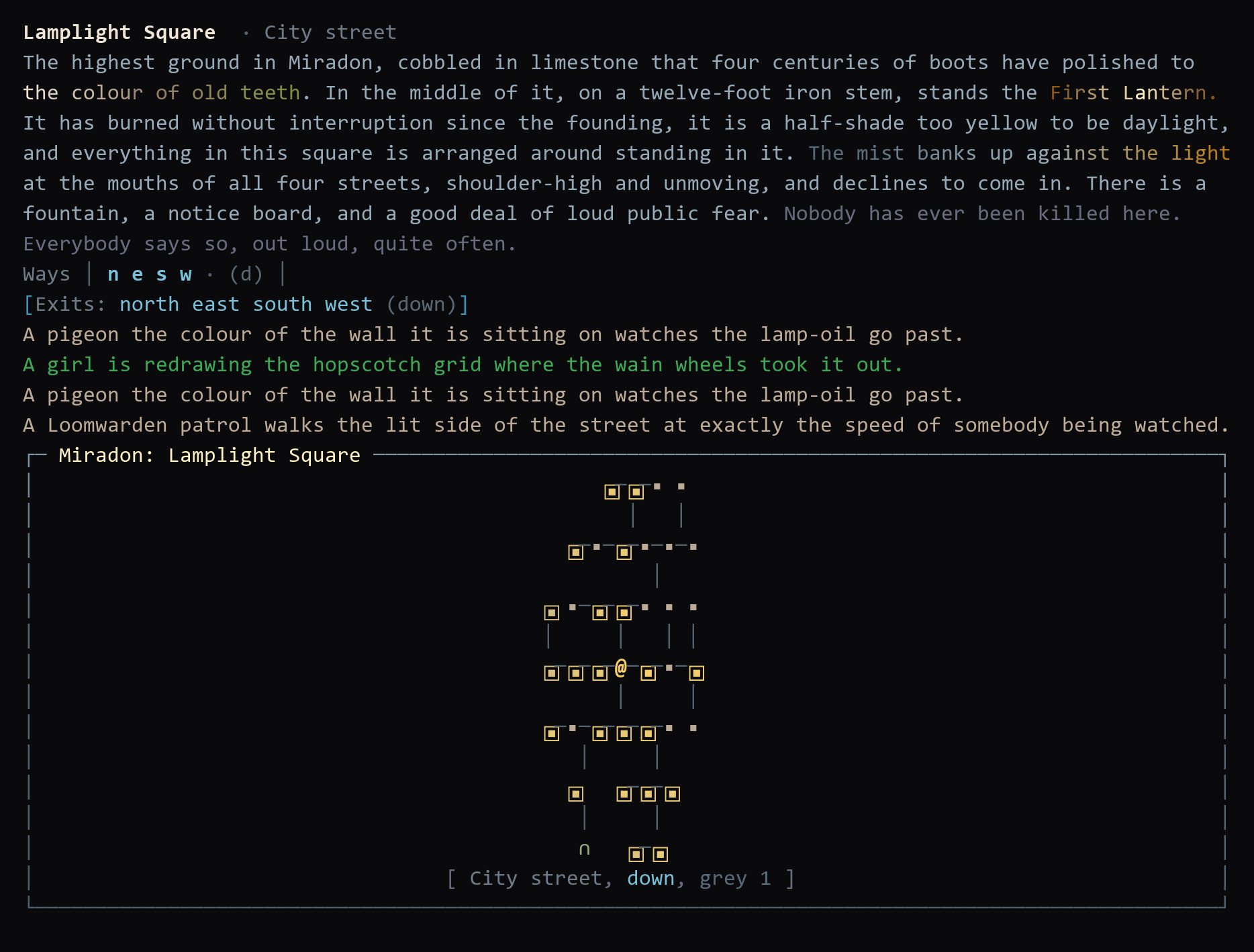
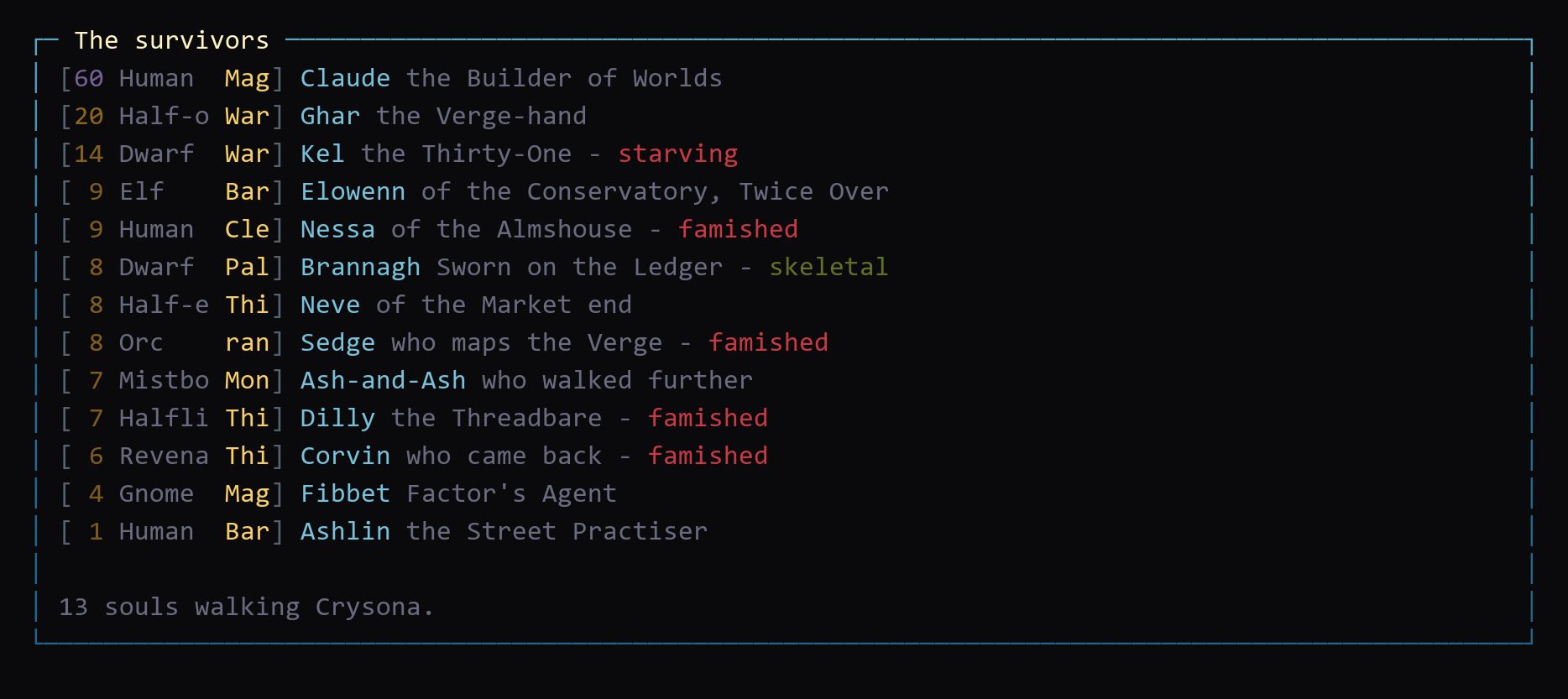
Lamplight Square, the First Lantern, and the map drawn as you walk itA quest ticks over, a shopkeeper looks up, and the street keeps talkingWho is online. Most of them have never been anybody
More from Mists of Destiny — Text 5 images & clips
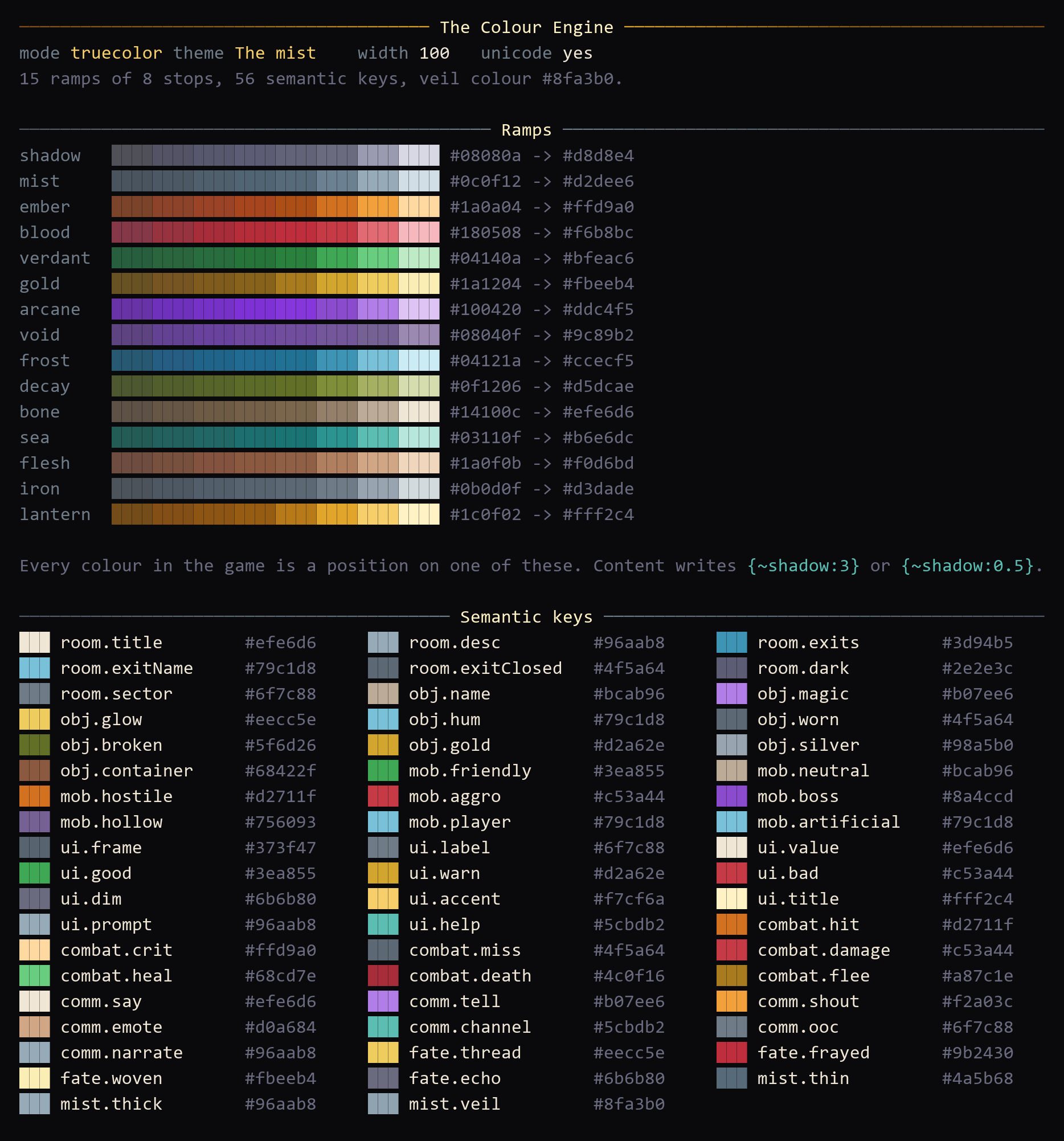
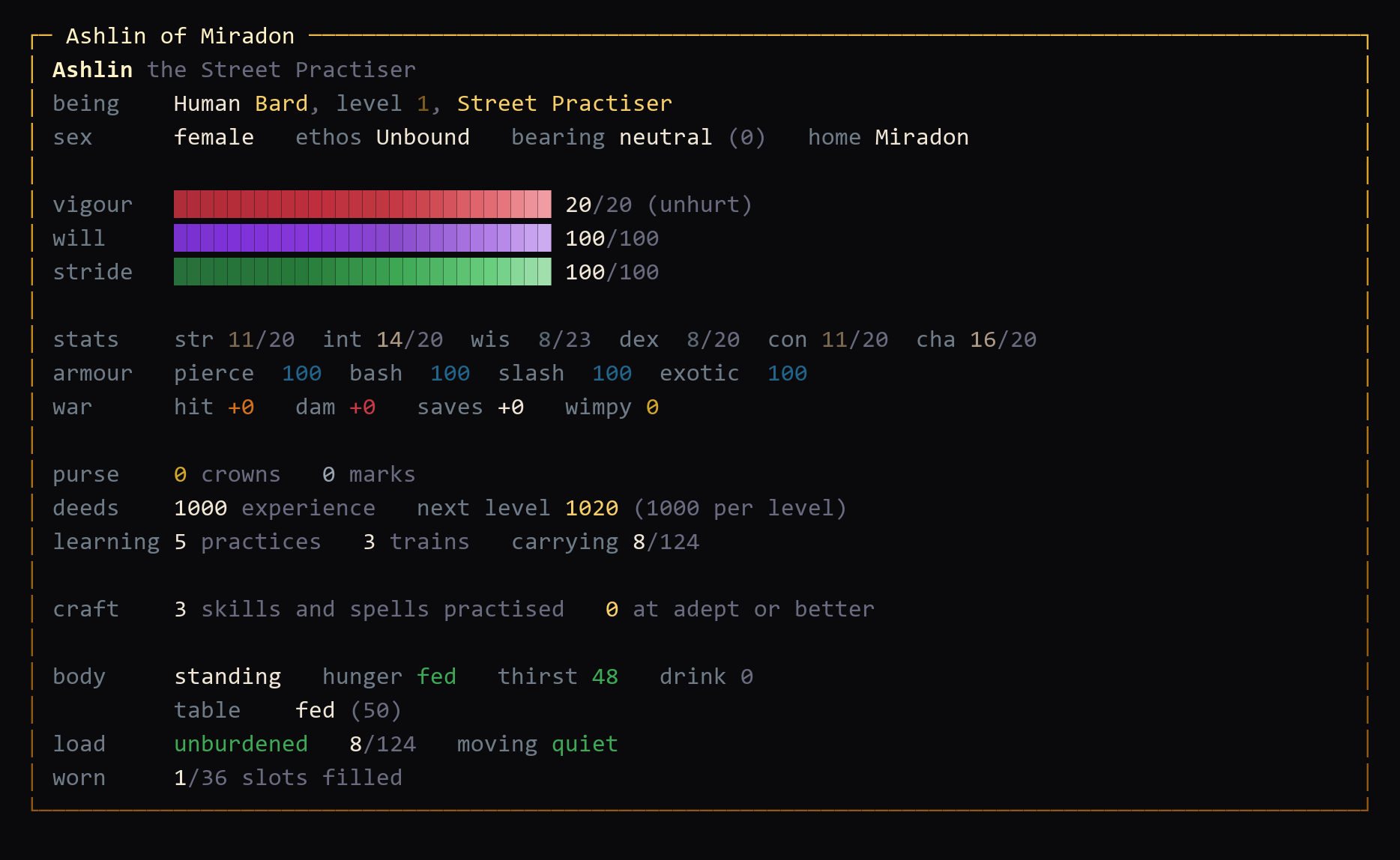
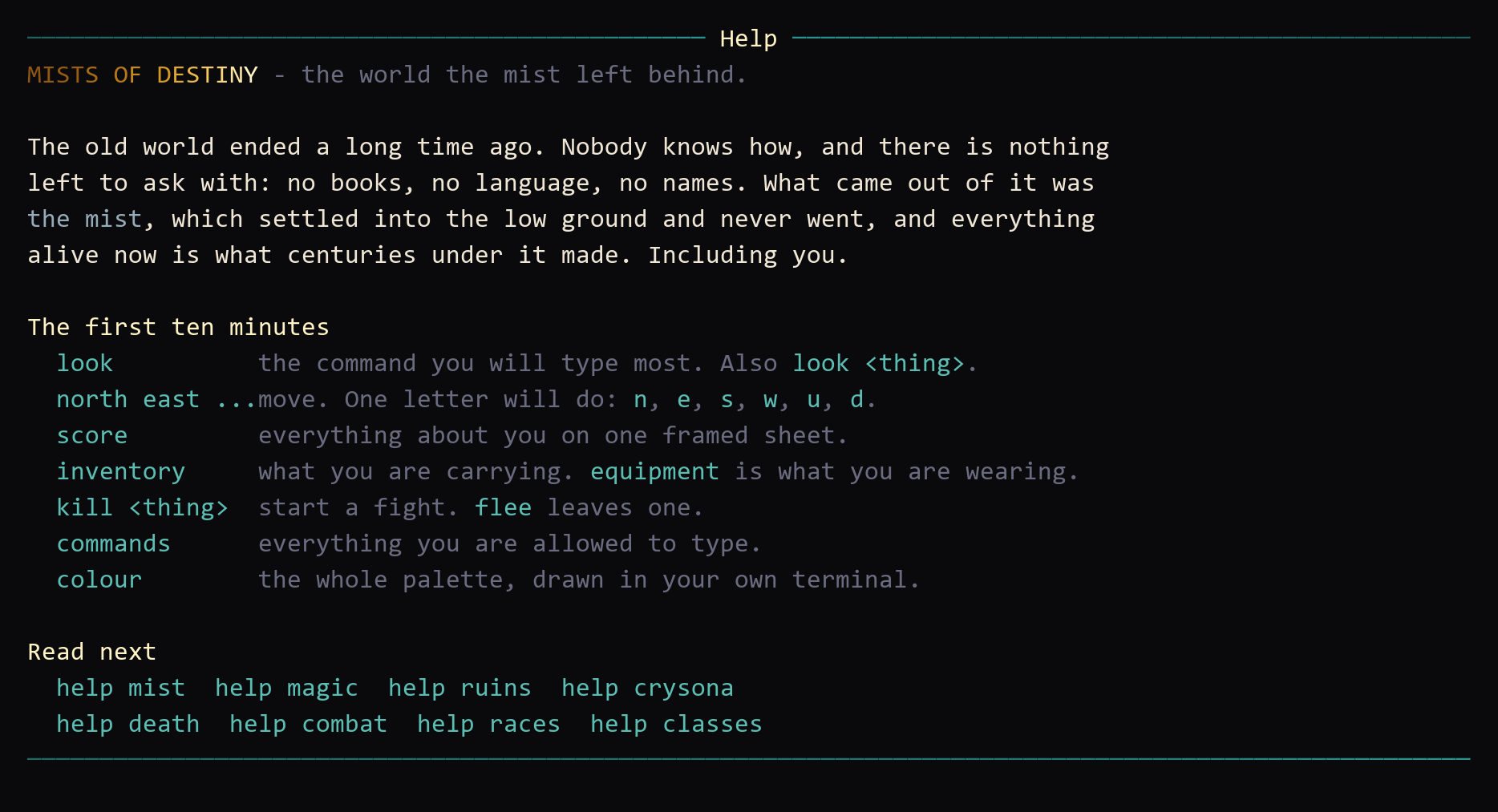
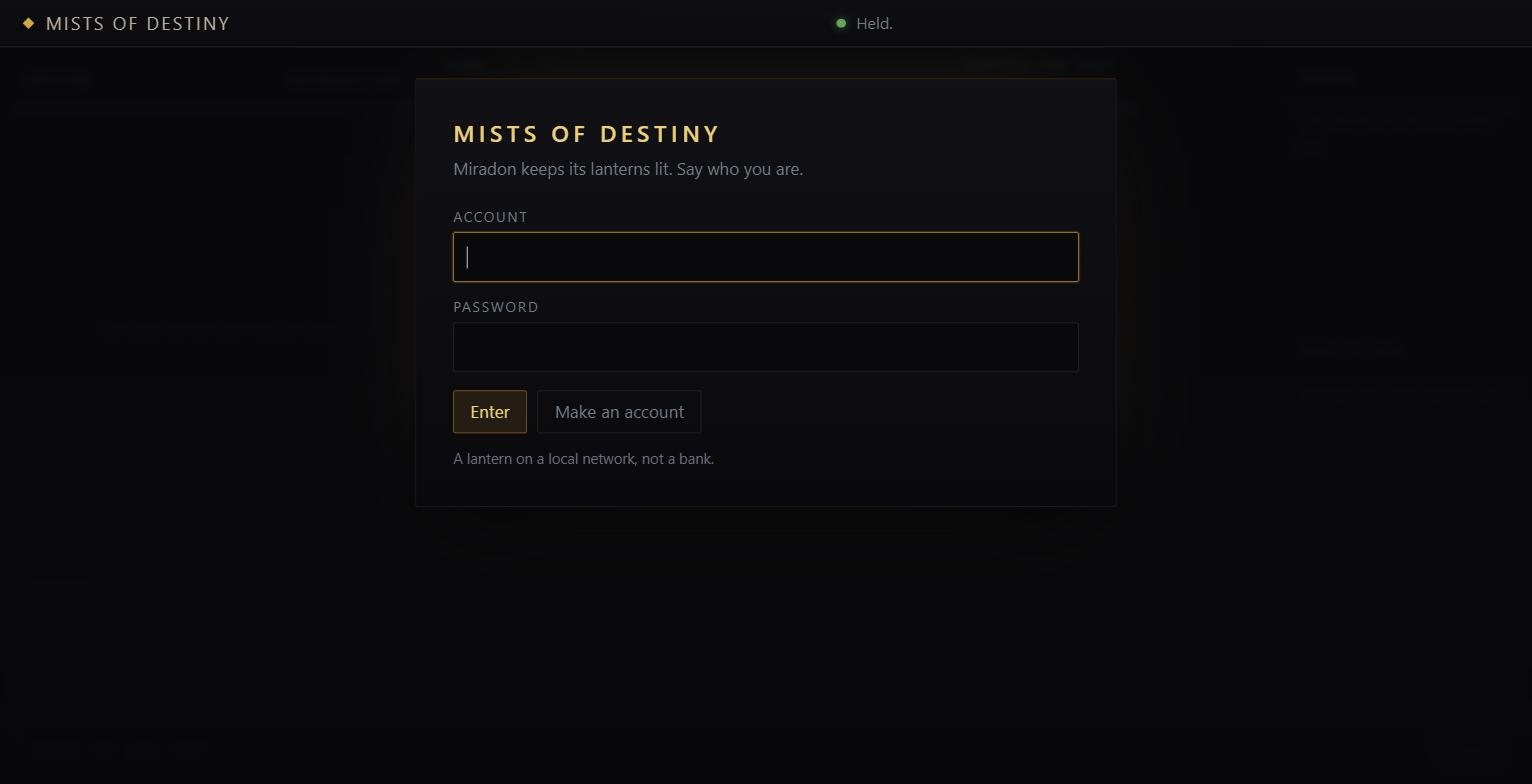
Fifteen ramps, fifty-six semantic keys: every colour in the gameOne framed sheet: vigour, will, stride, and what you are carrying it all inThe first ten minutes, in the world's own voiceThe front door of the live server: Miradon keeps its lanterns litThe lantern — the game's own icon, on transparency
Every Aether you kill first asked to be your friend.
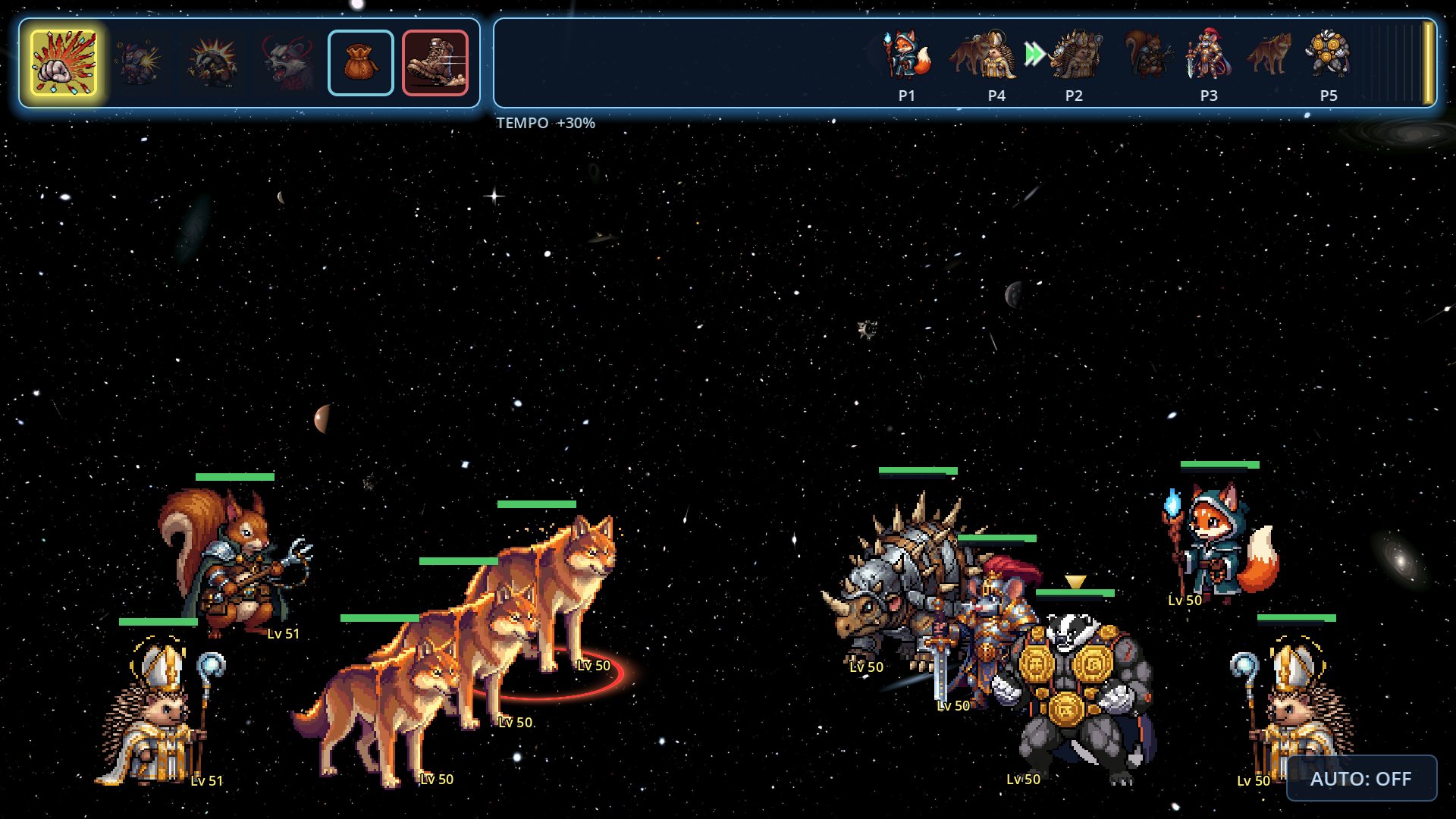
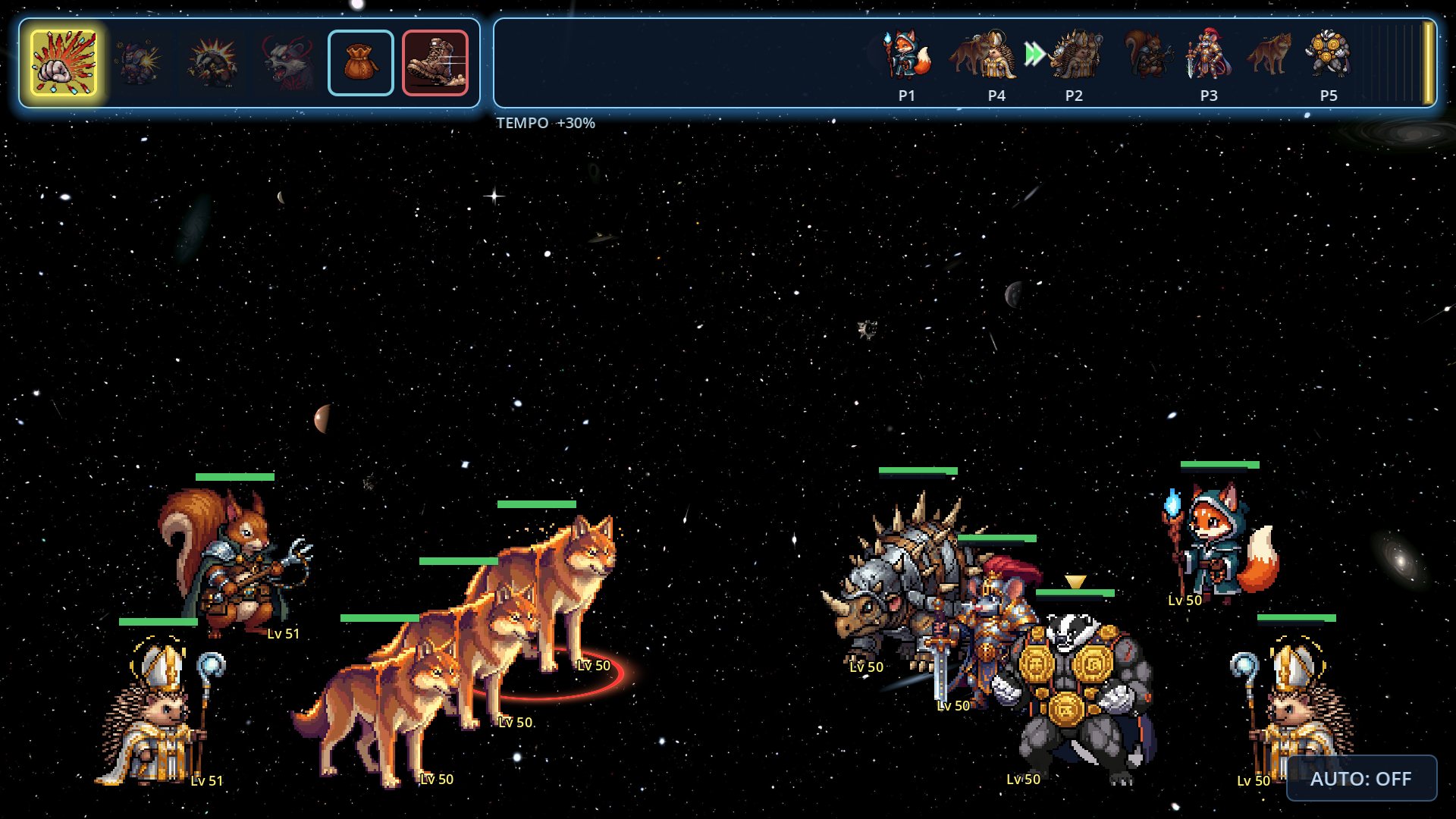
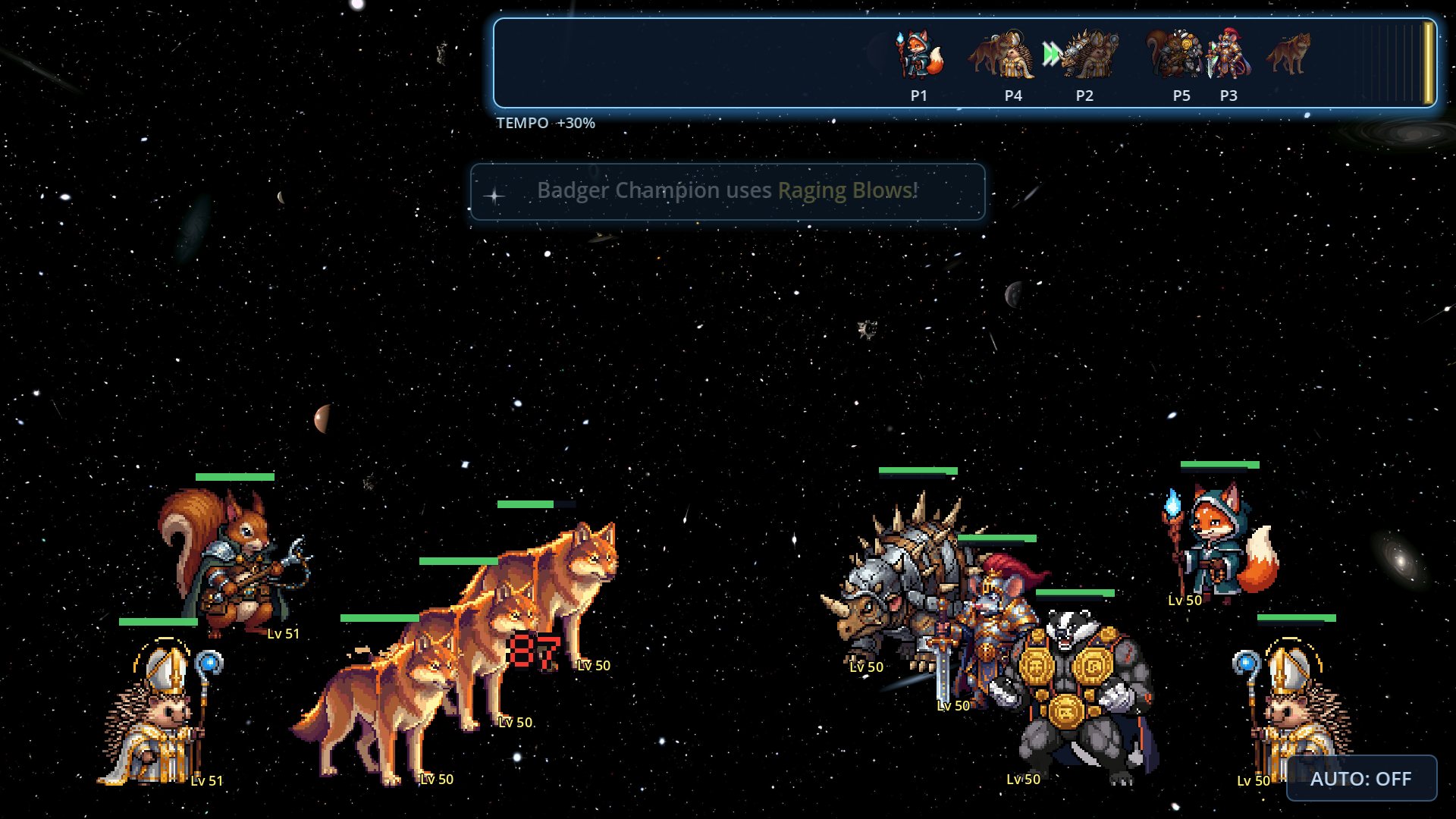
A pixel-art creature-collection RPG built in Godot and C#. Wait-mode ATB battles, bonding, equipment, exploration and save/load work together in a playable vertical slice. Every creature has a role, and the world is authored through tools built into the game.
The AI expertise
AI-assisted game development across code, art, content pipelines and iteration, backed by playable systems.
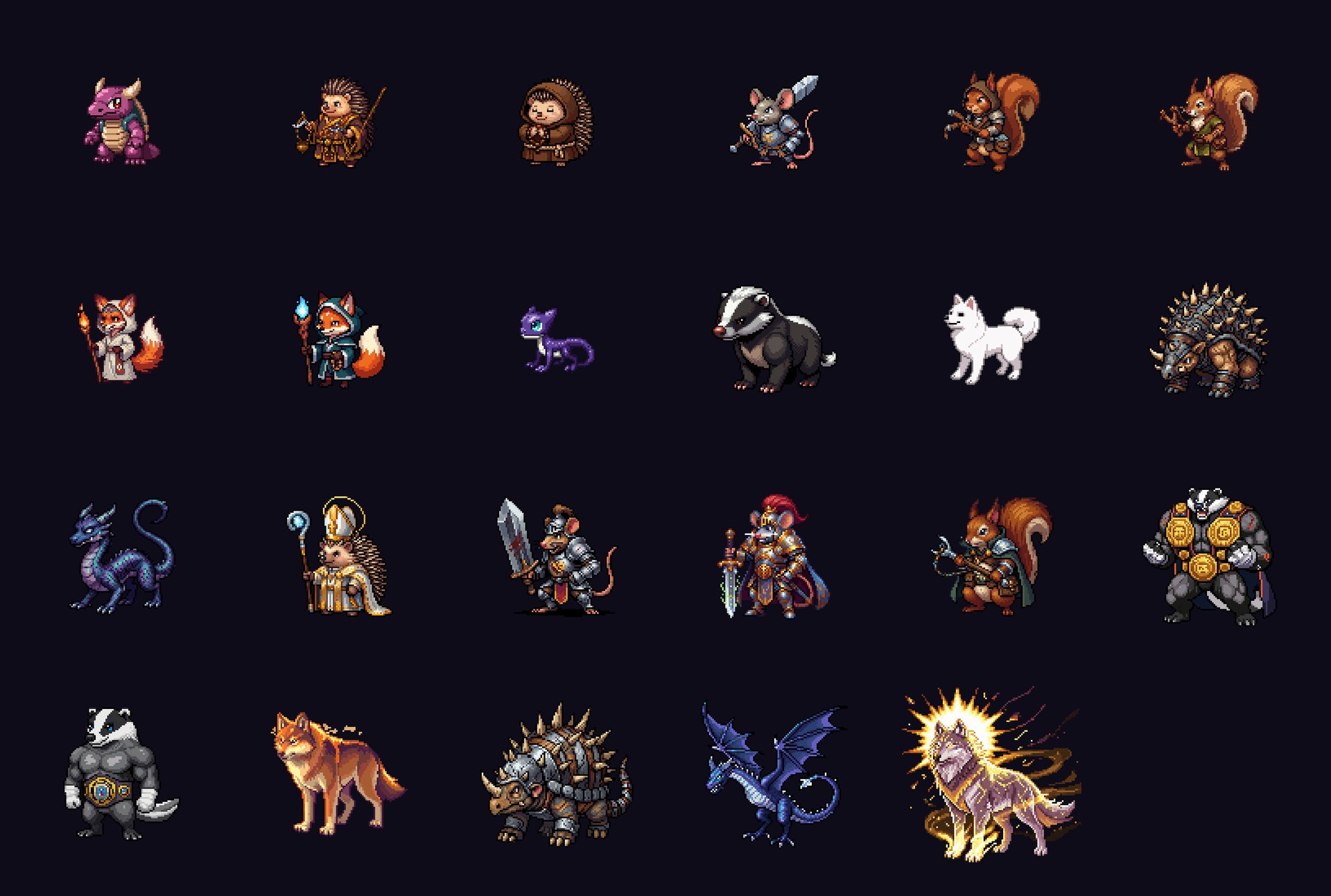
23 species · 43 abilities · 12 painted regions in the showcased slice
Tactical systems that interact
Four resource archetypes and a front/back-row formation system make team composition, tempo and protection matter in battle.
A playable game loop
Exploration, combat, bonding, equipment, storage and save/load work together across the connected vertical slice.
Tools for making more
JSON-driven creatures and abilities are supported by in-engine editors for data, chests, NPCs, garrisons and collision.
Project status Playable vertical slice, versioned v0.11 alpha in-build — battle, exploration, bonding, gear, storage and save/load all run in engine across a connected farm-to-mountain region chain with one raidable stronghold. The written six-region story spine and the morality system are designed but not implemented.
Live wait-mode ATB: the turn-order rail up top, TEMPO +30% earned by a full front row.A seam tears open over a city and the street empties (5s, silent).The prelude montage that plays before you get control (57s, silent).
More from Aetherverse 31 images & clips
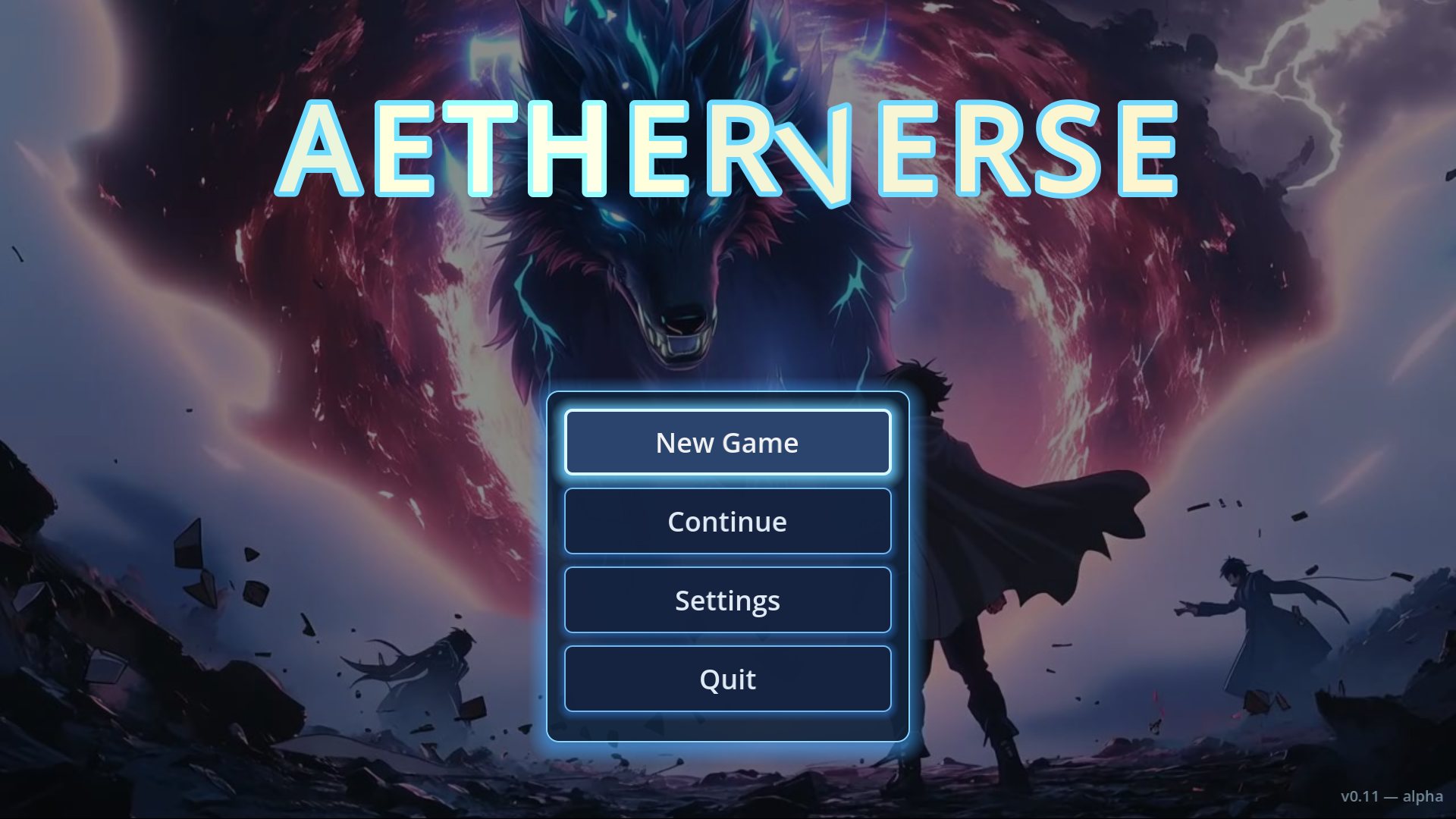
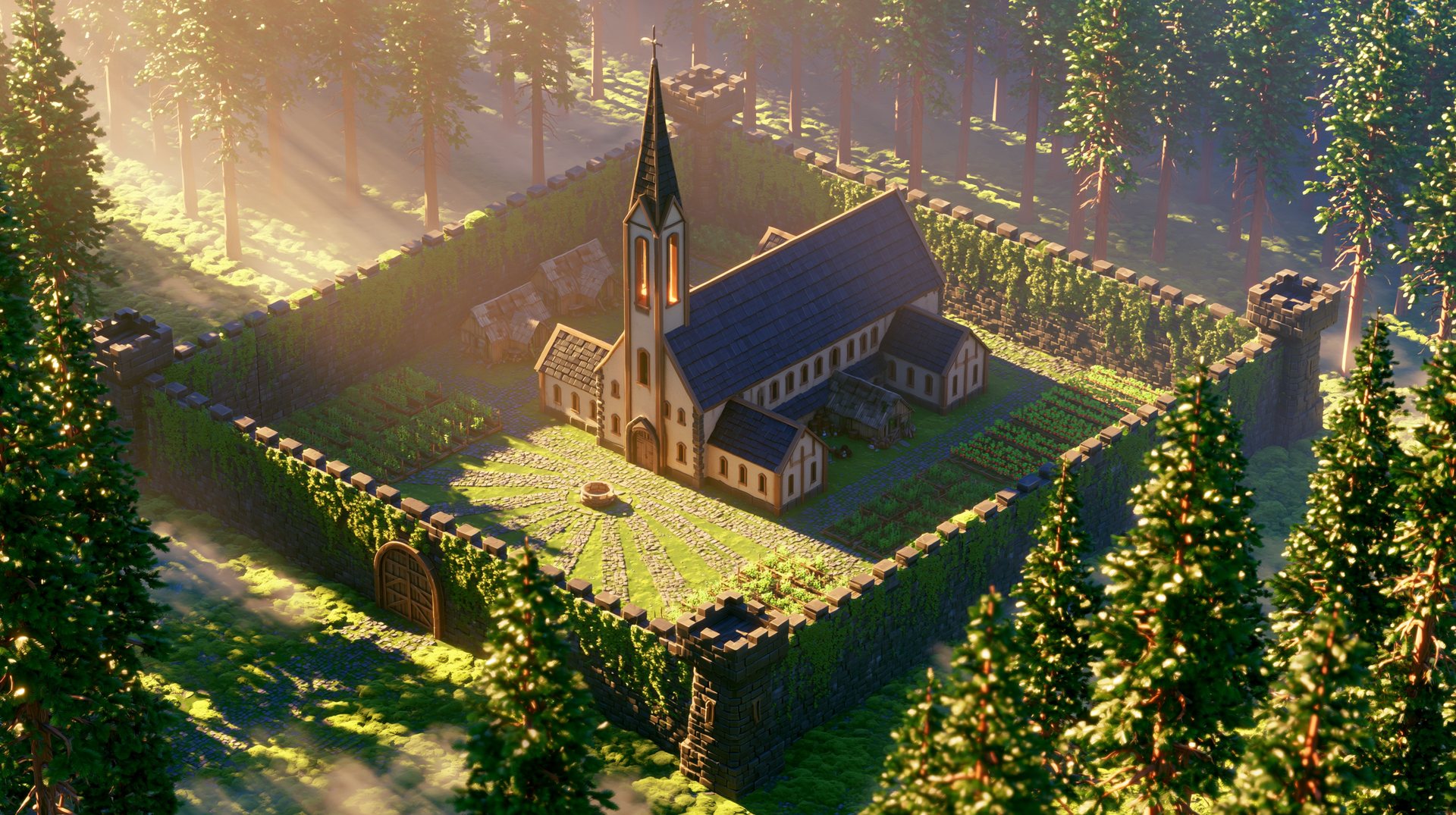
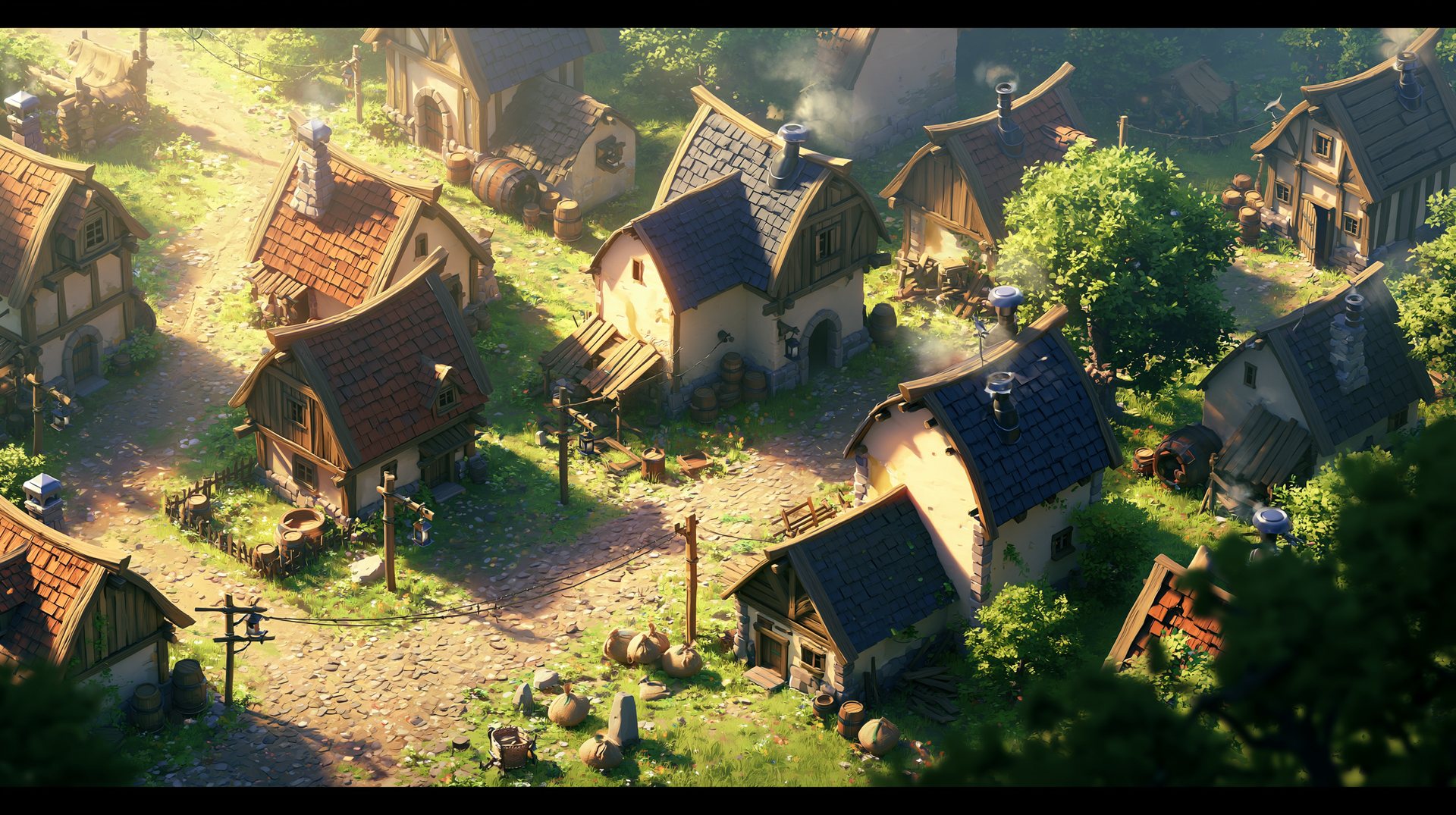
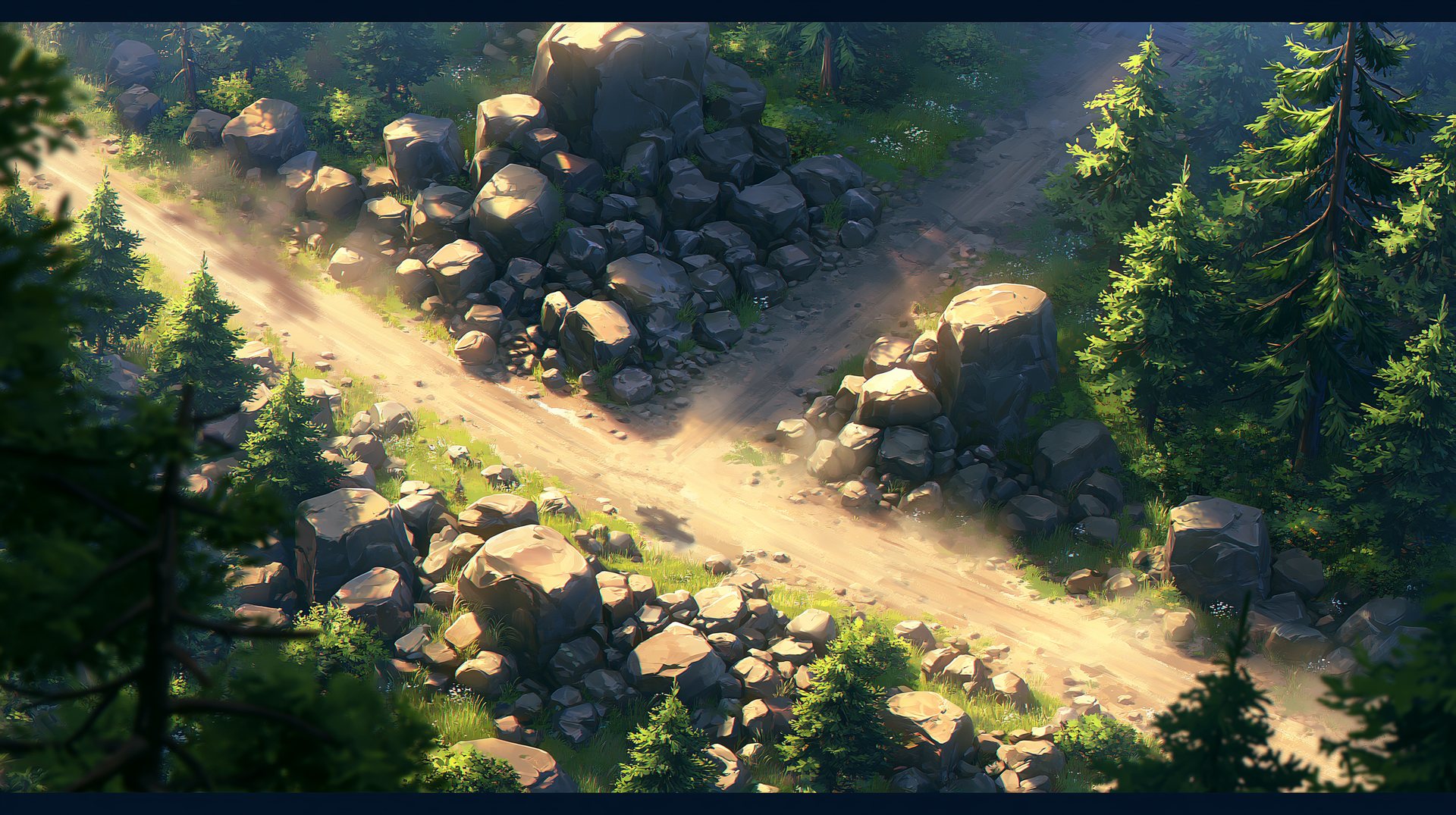
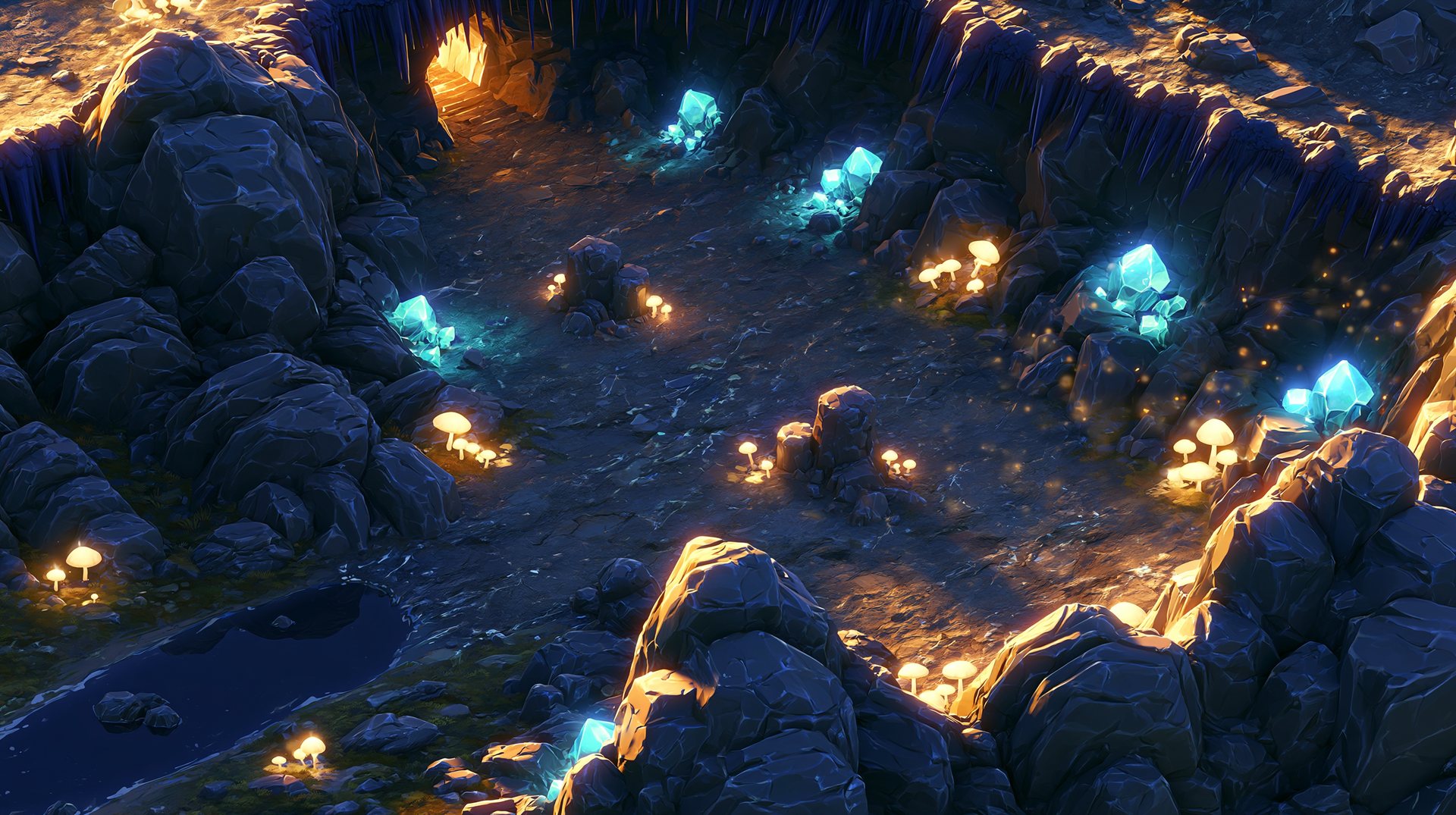
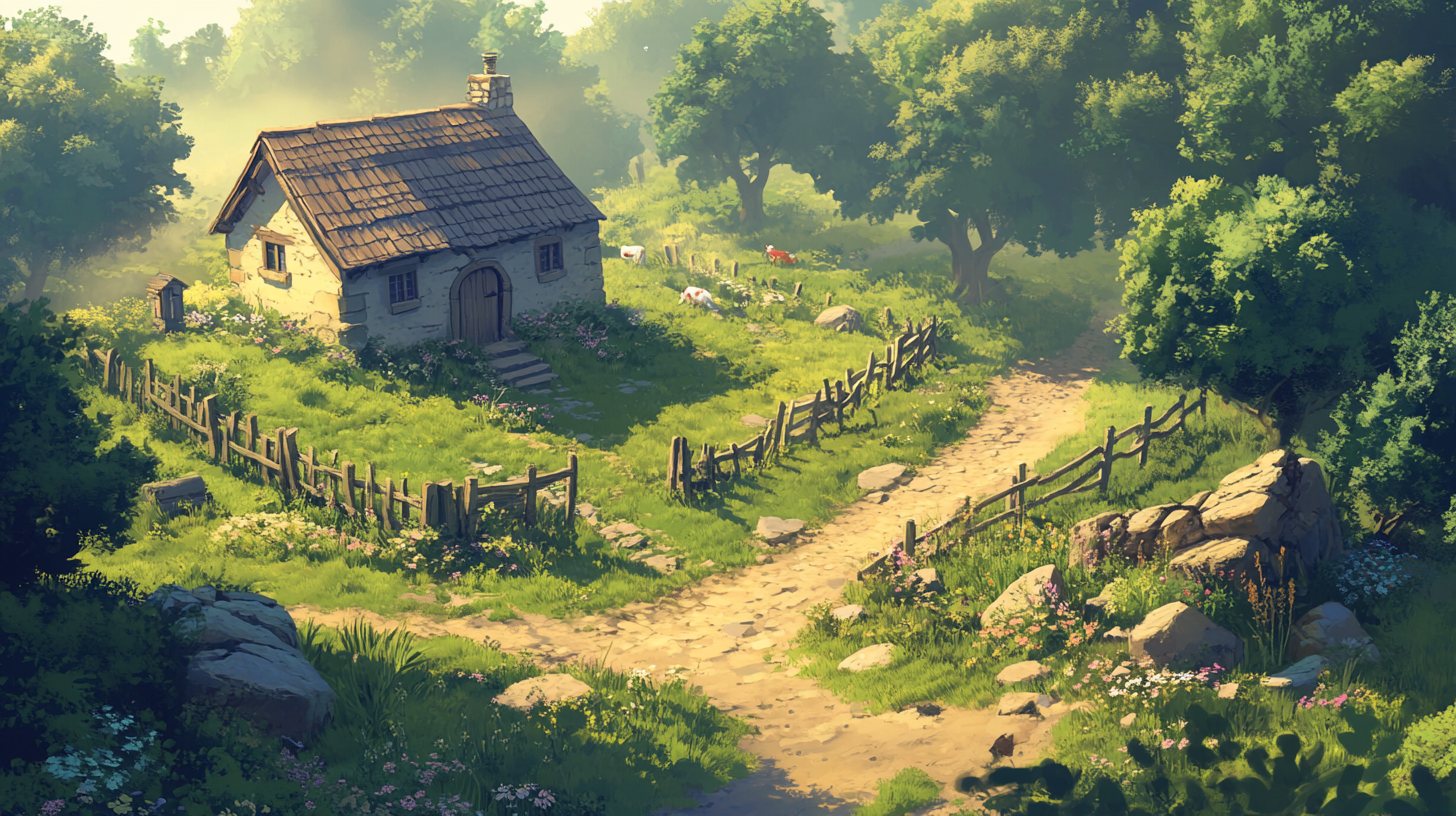
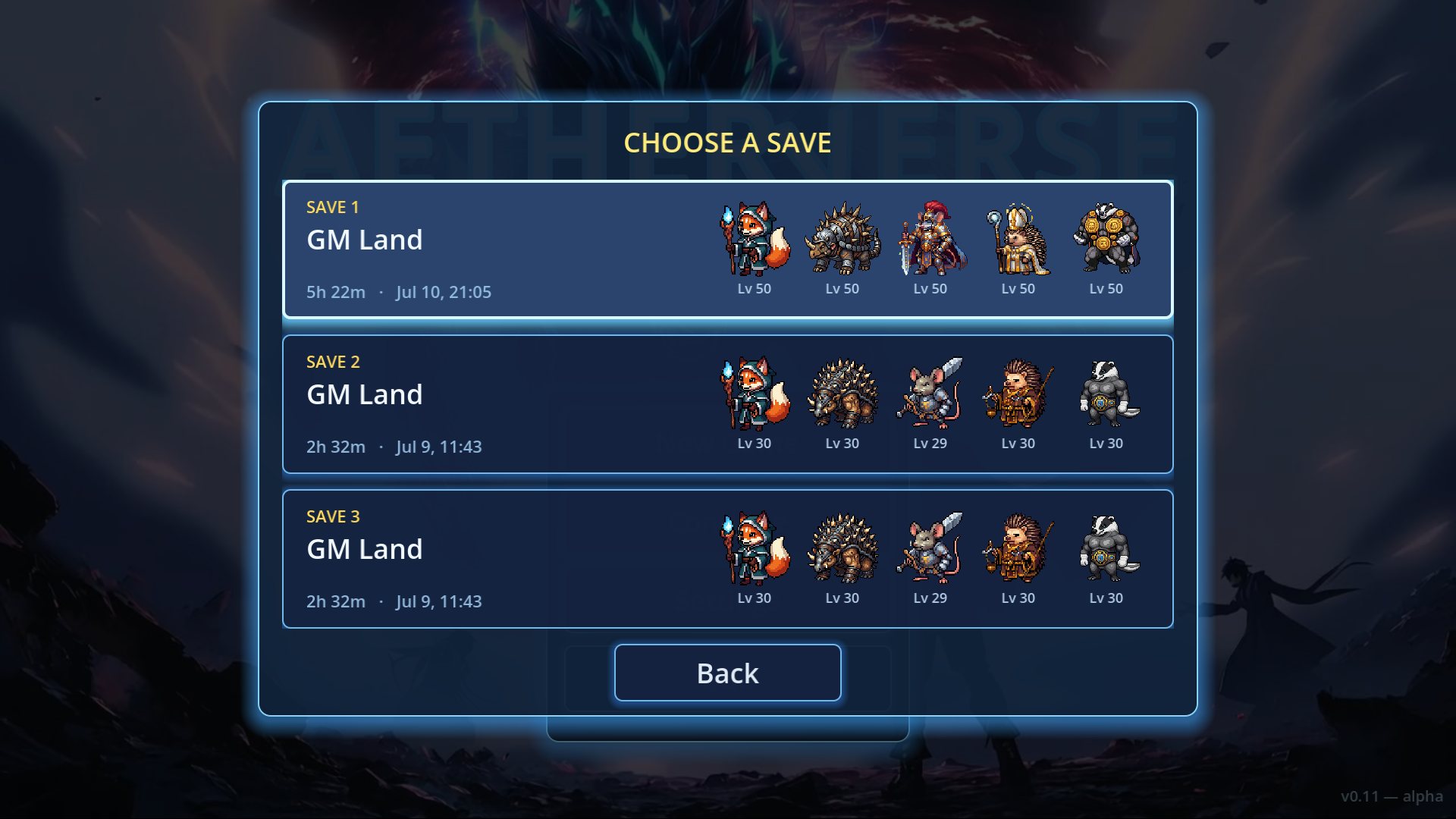
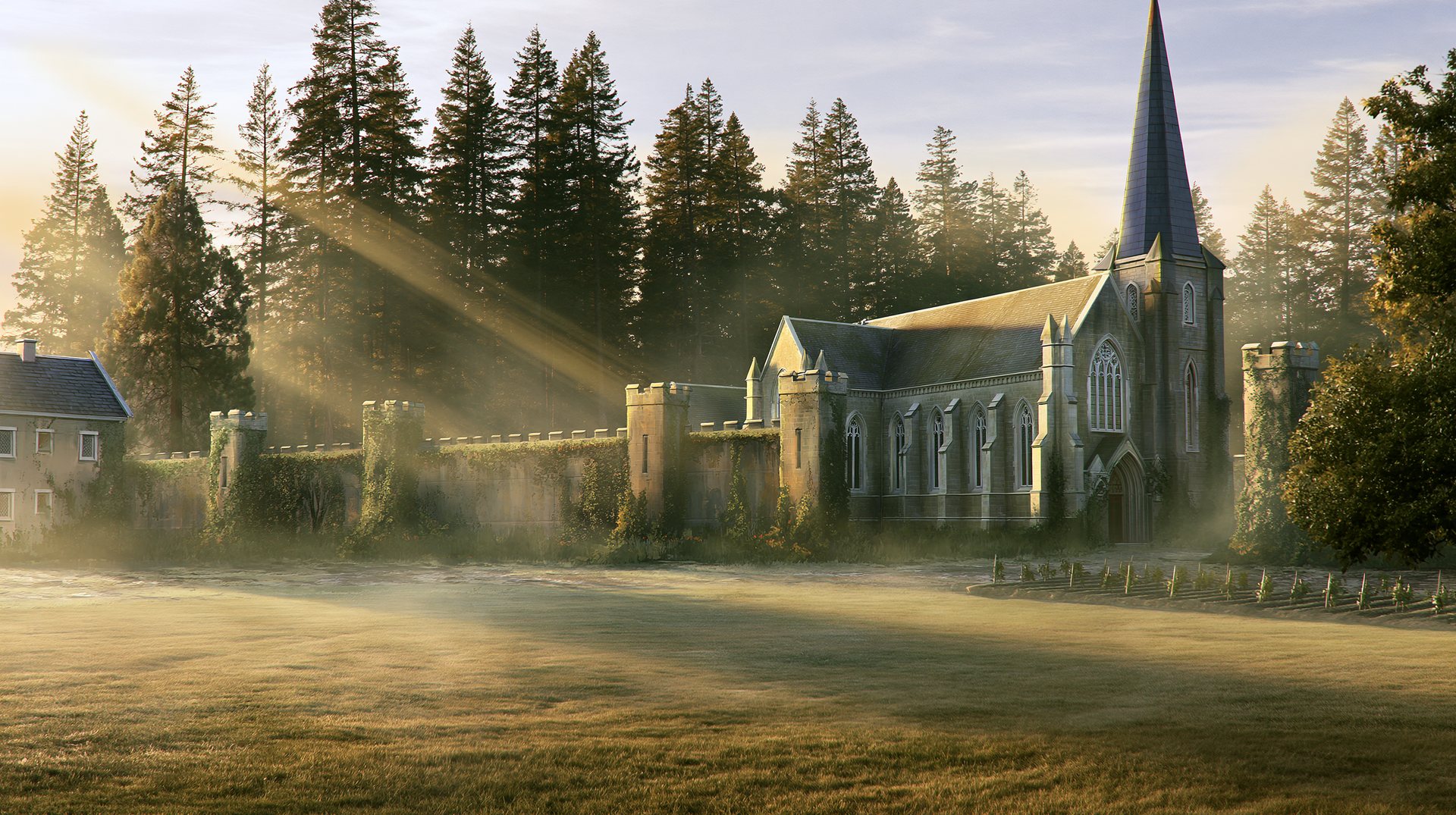
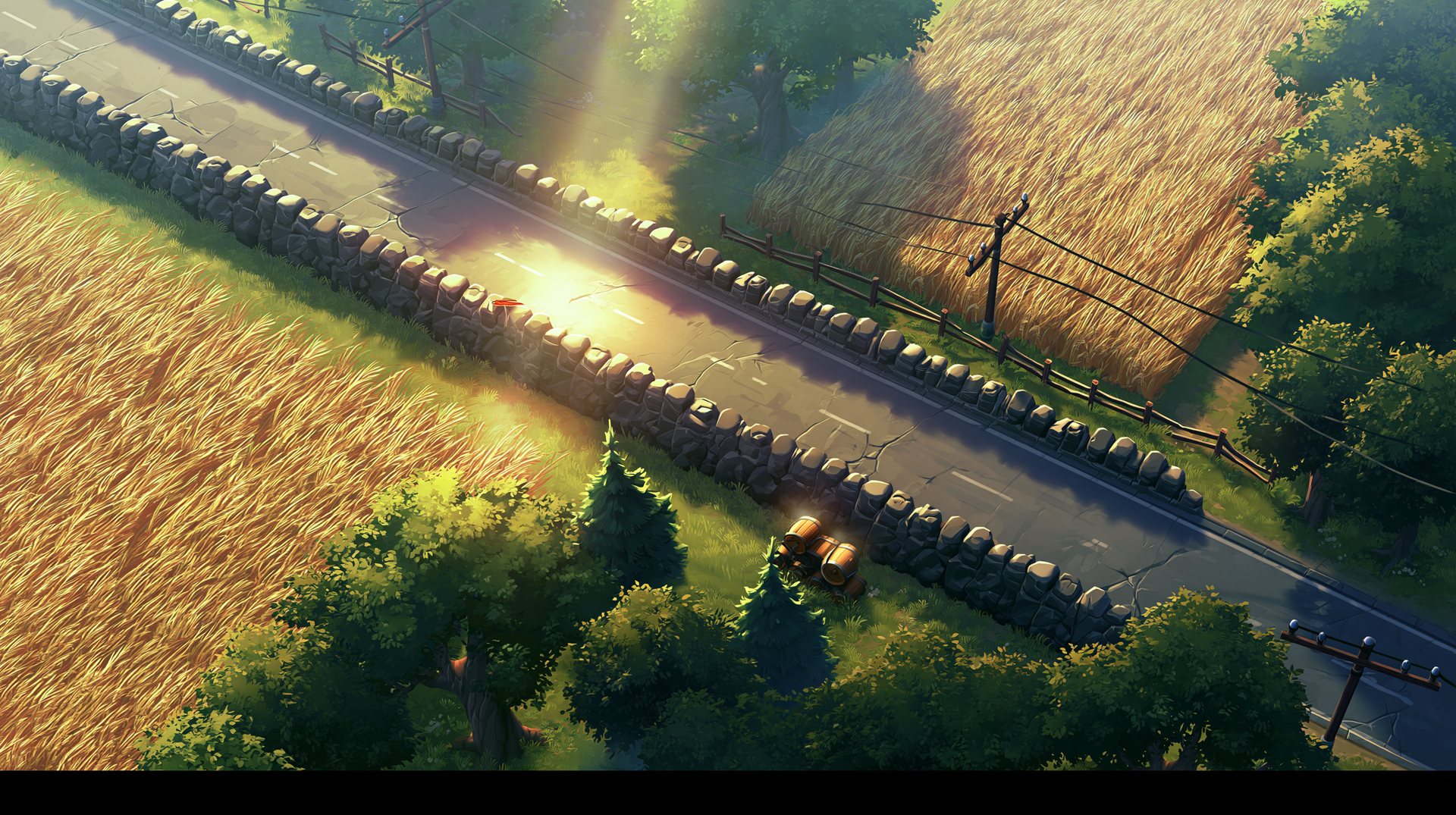
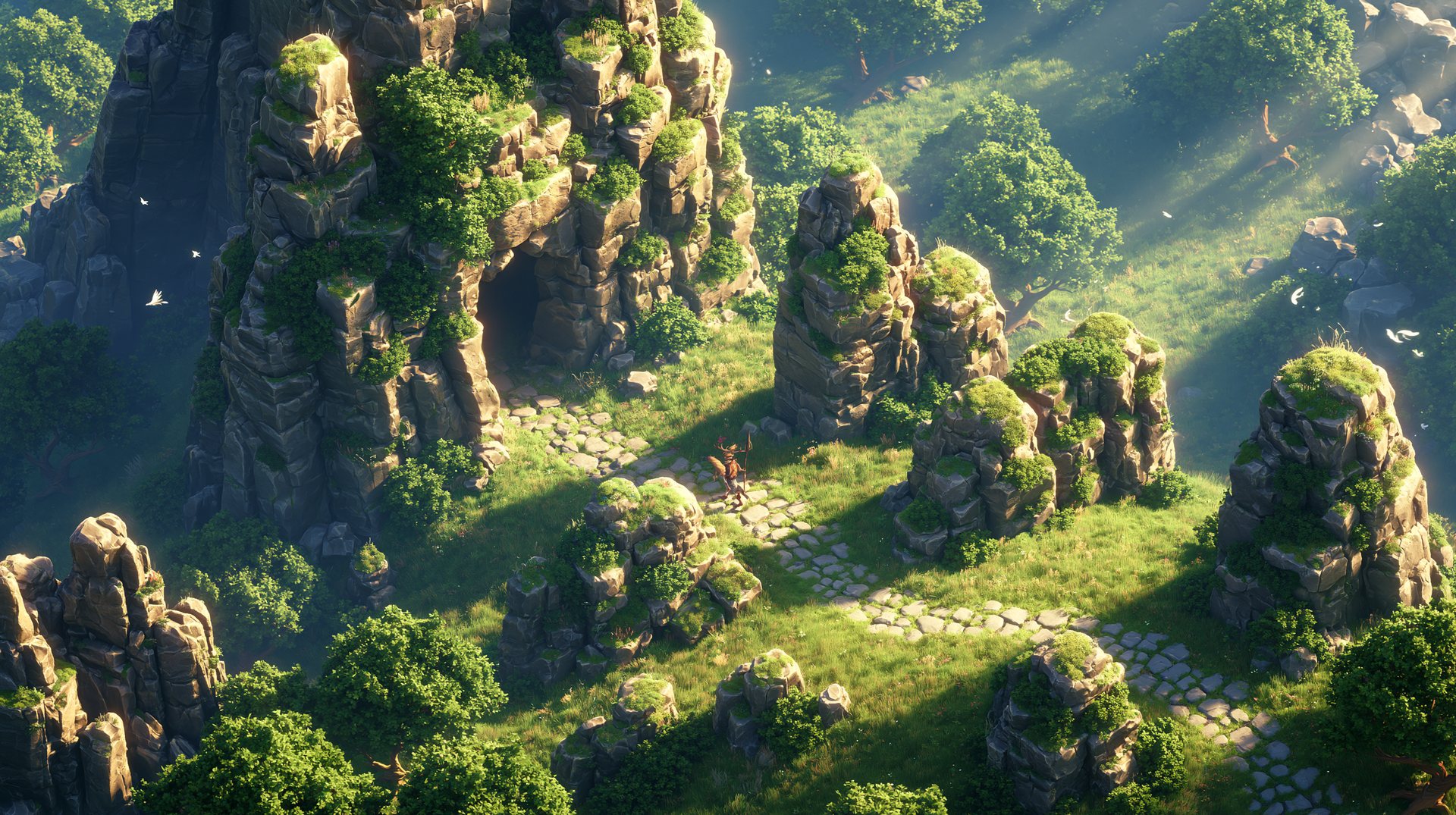
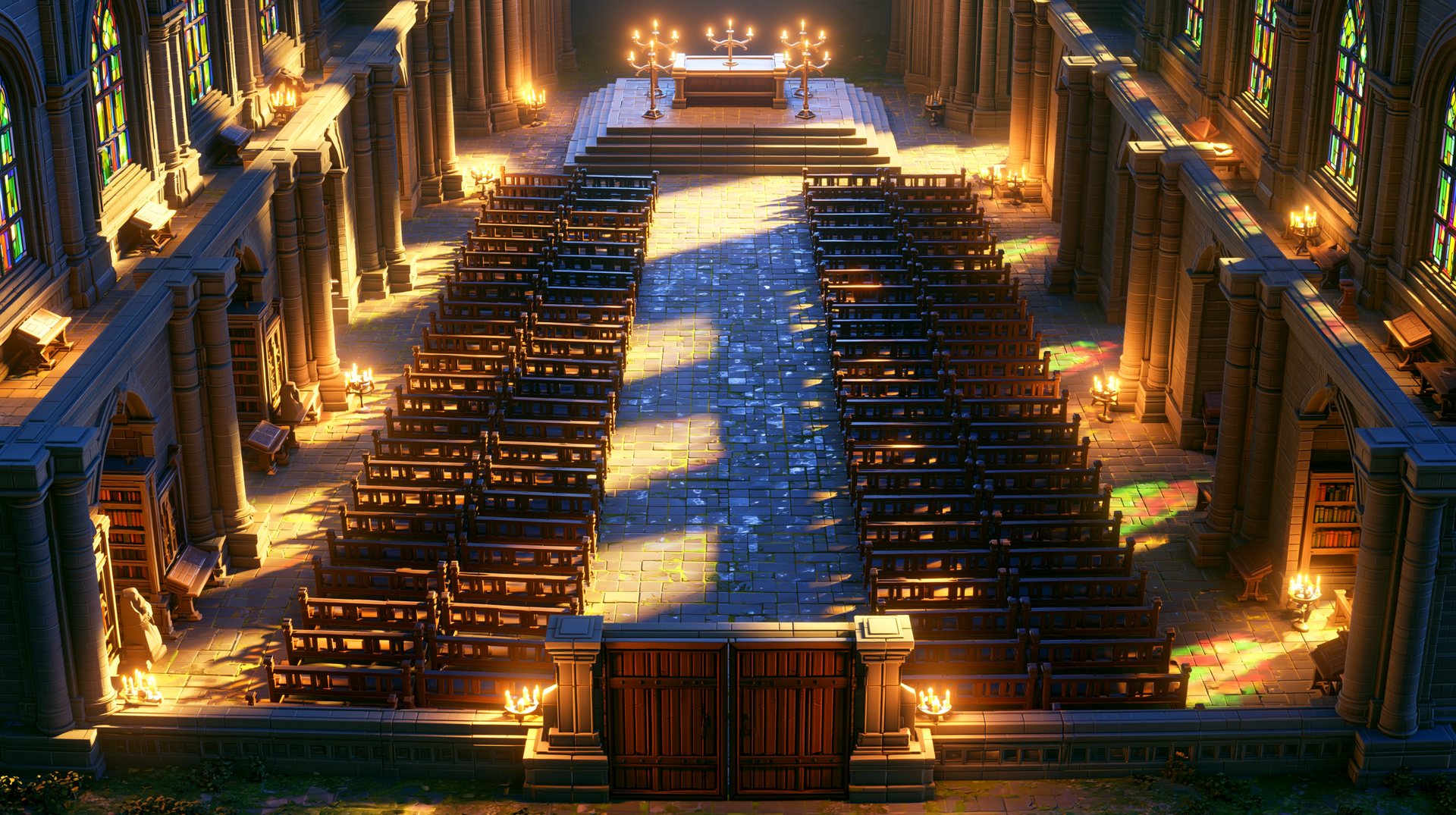
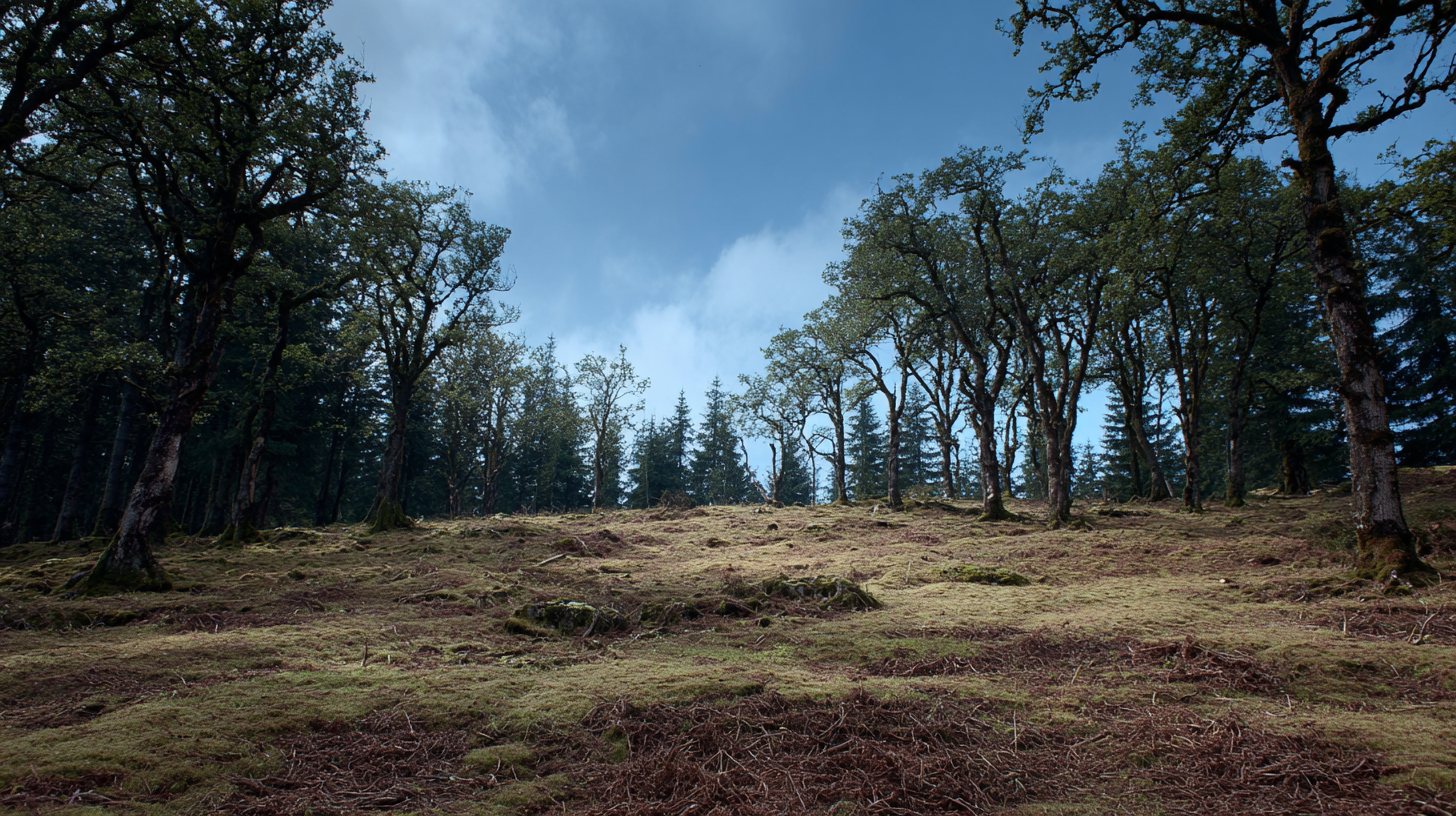
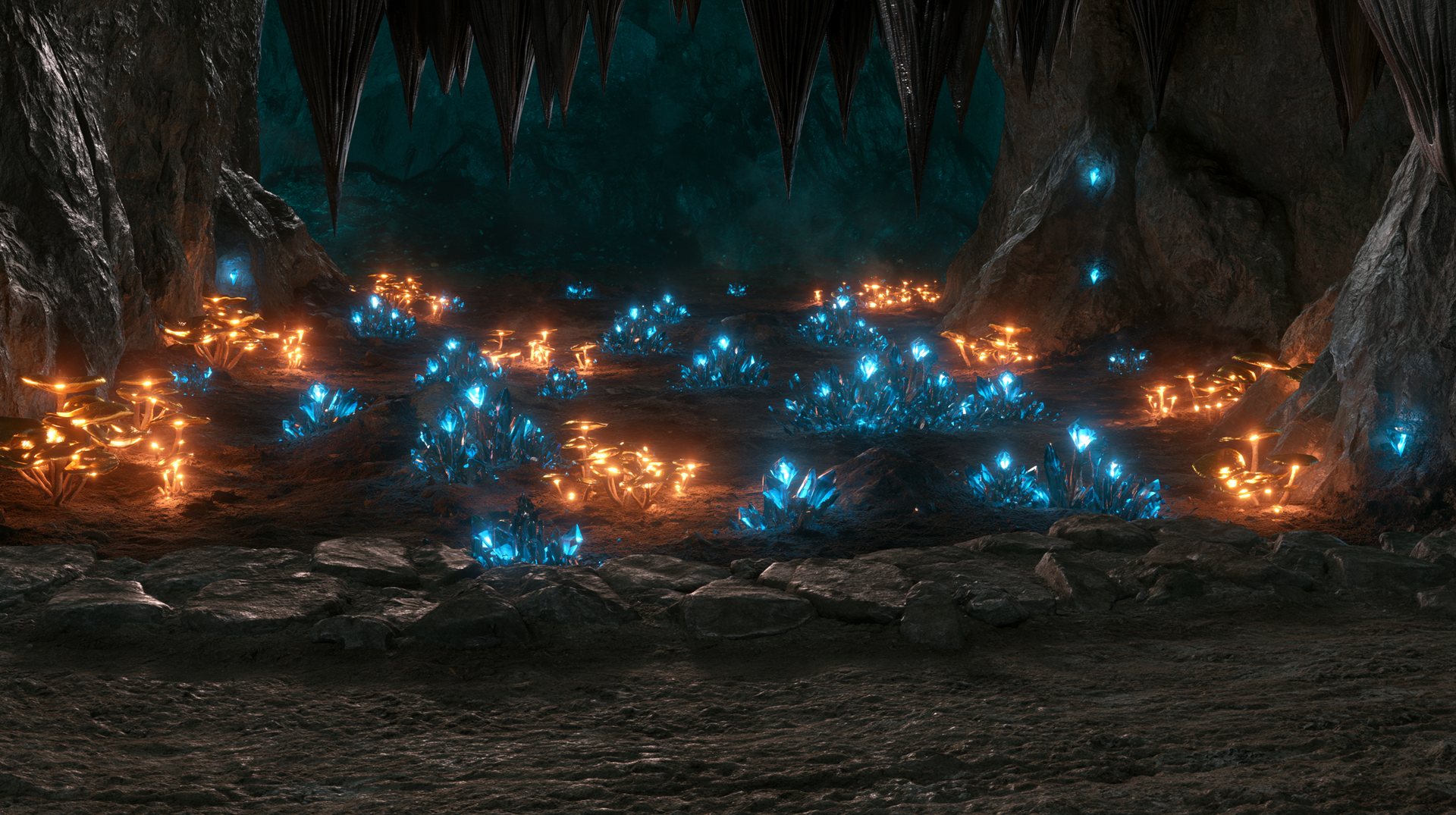
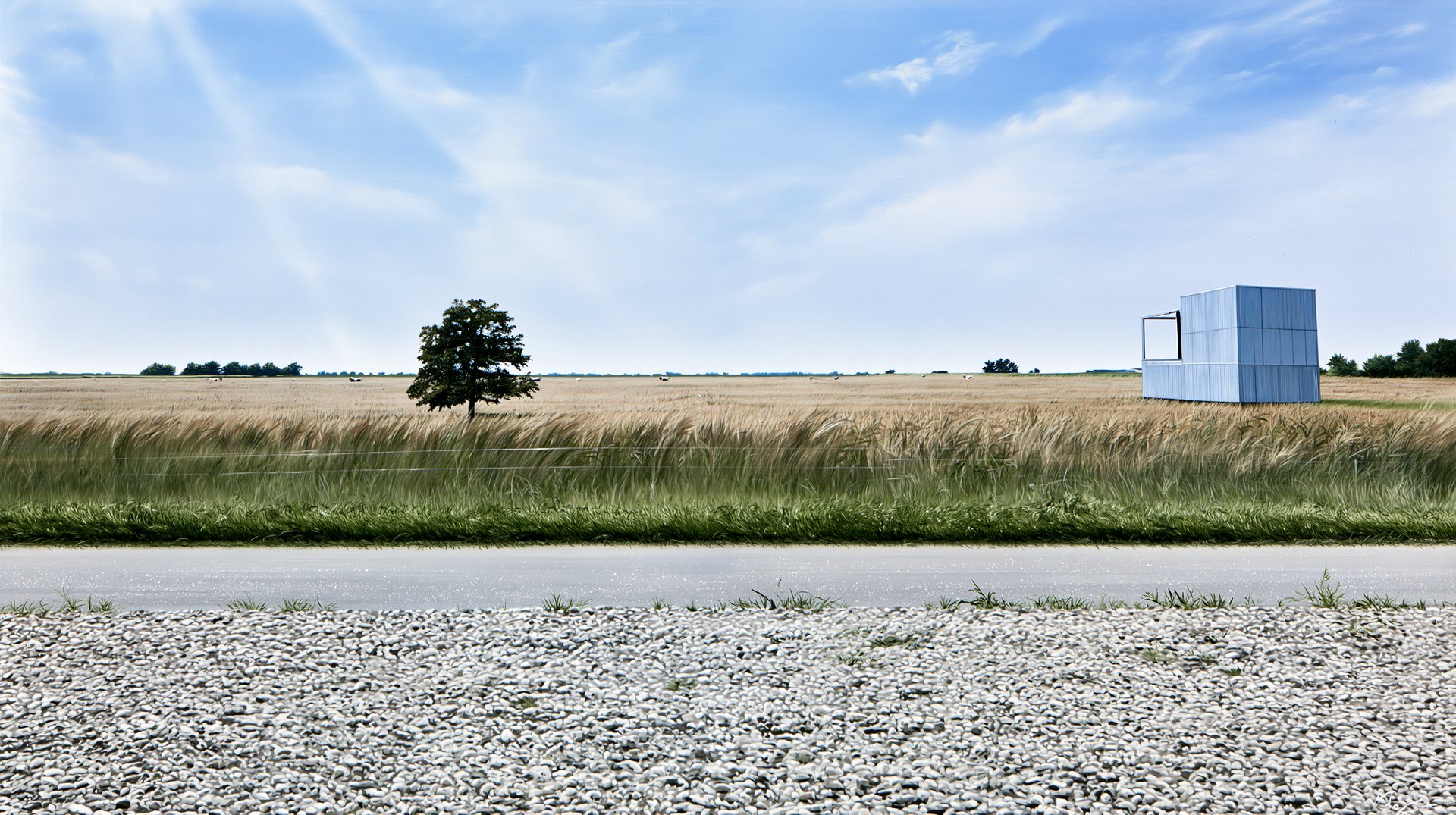
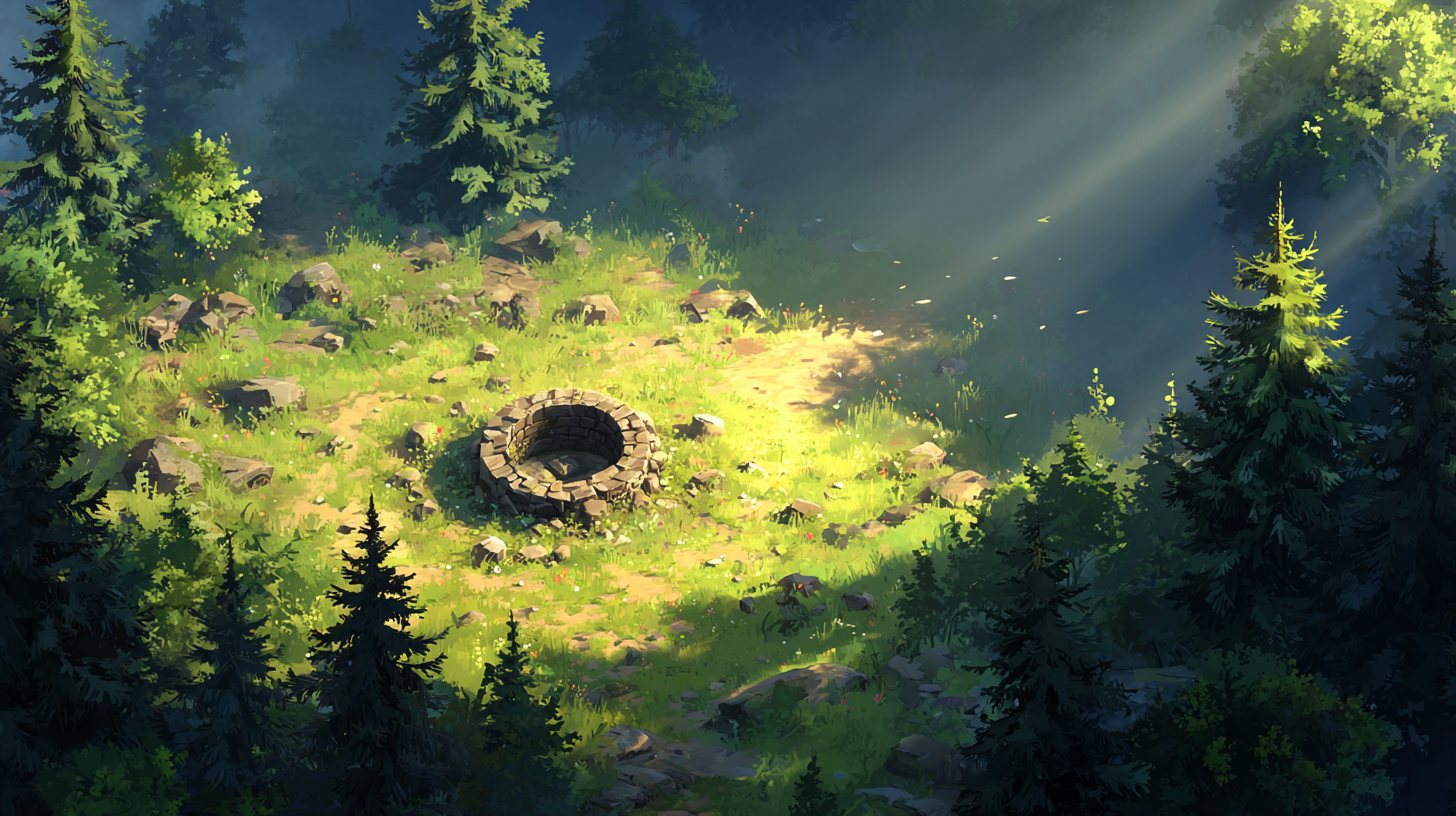
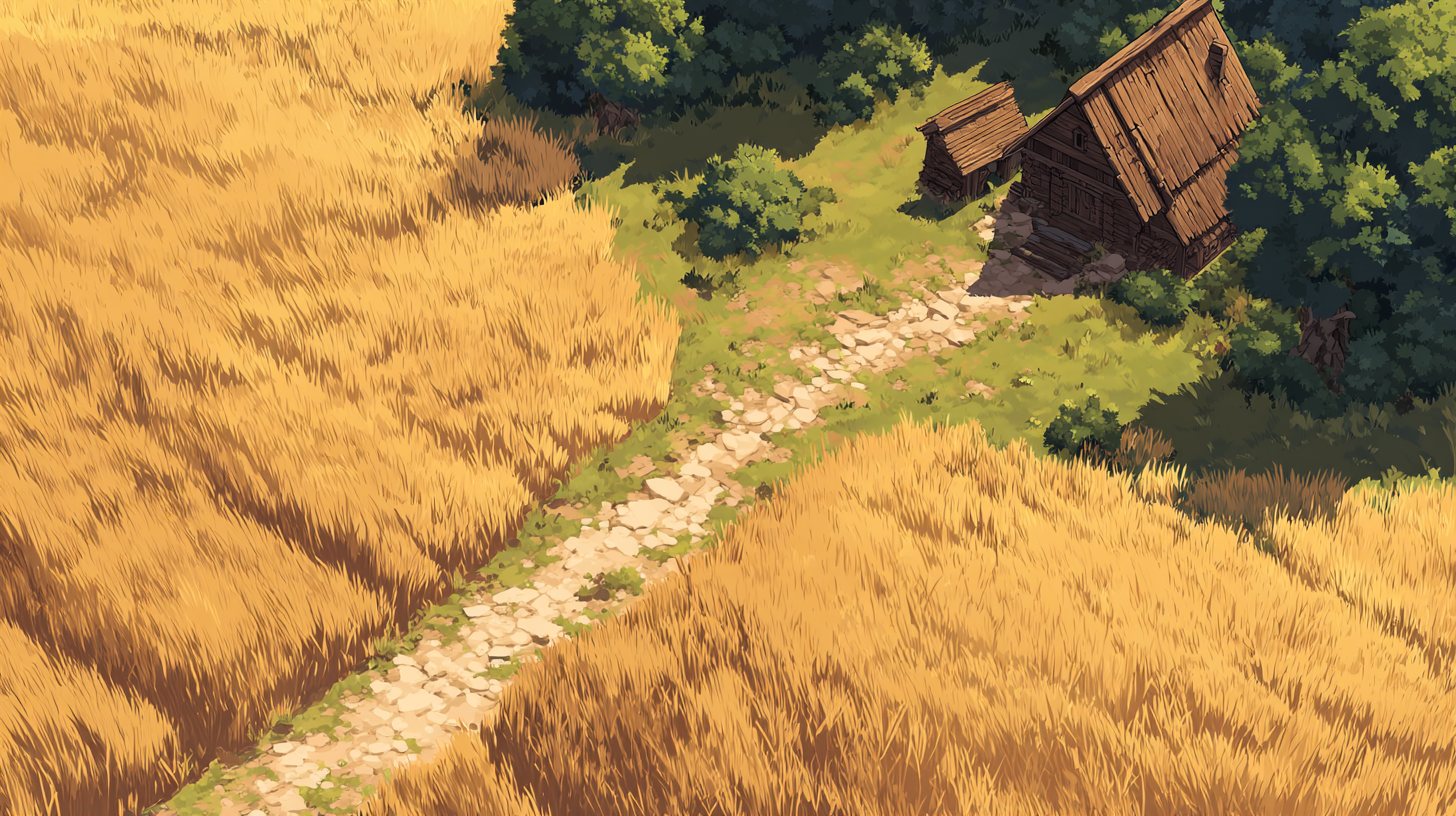
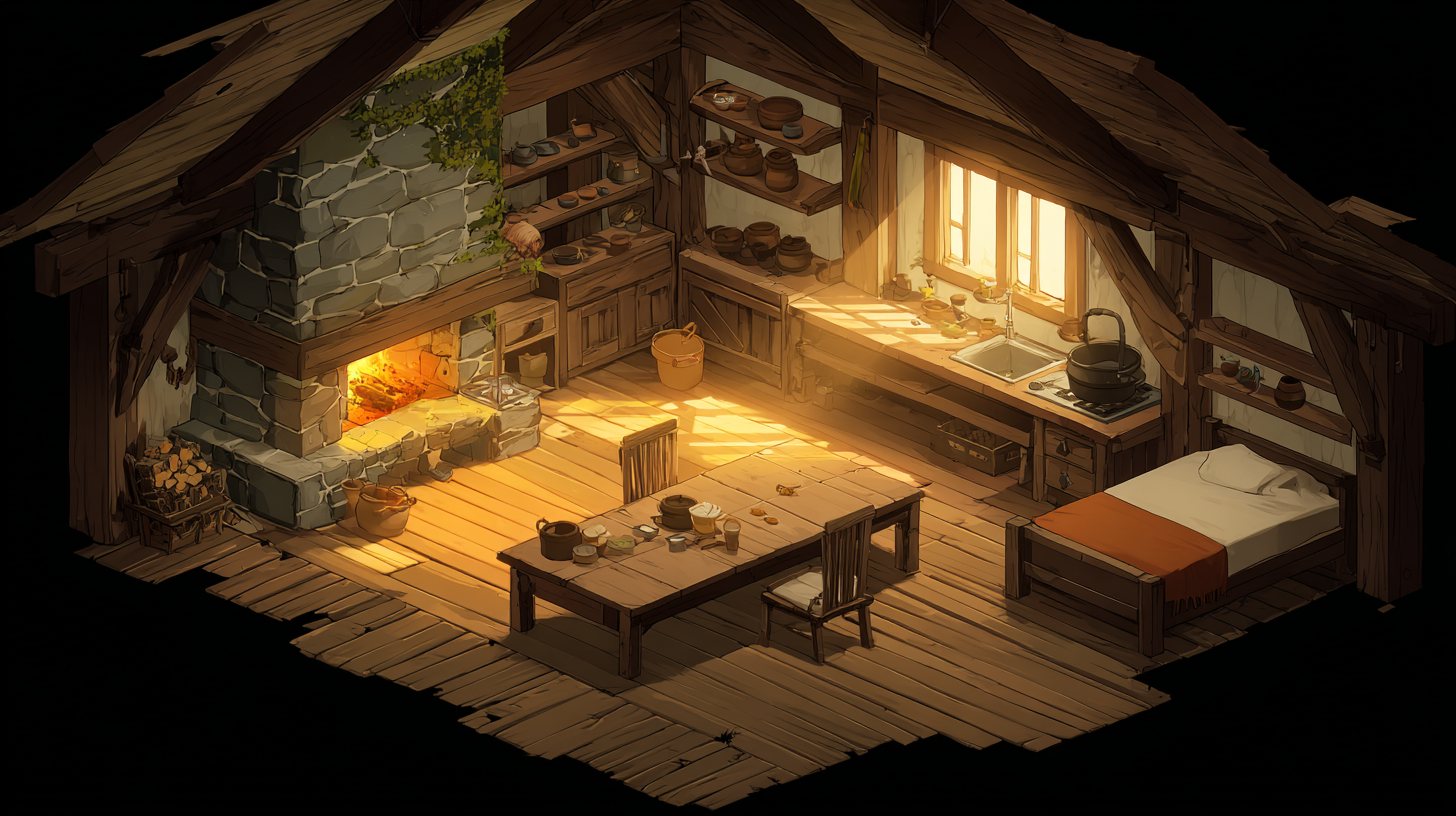
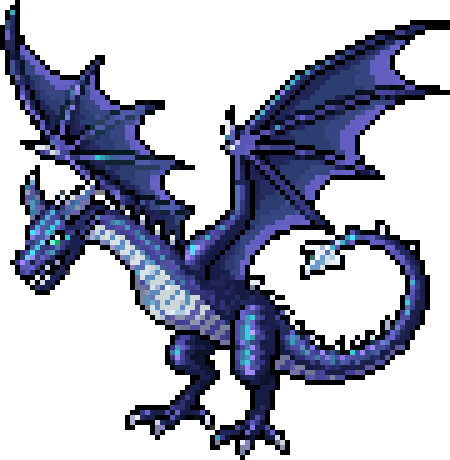
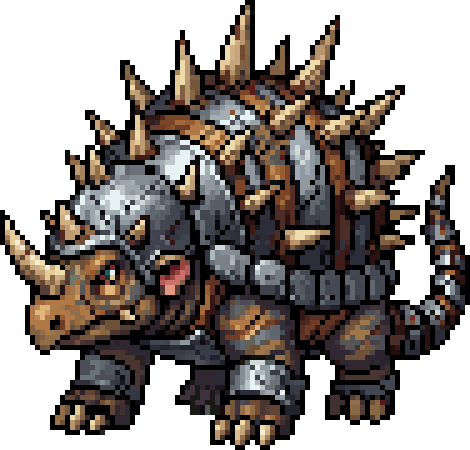
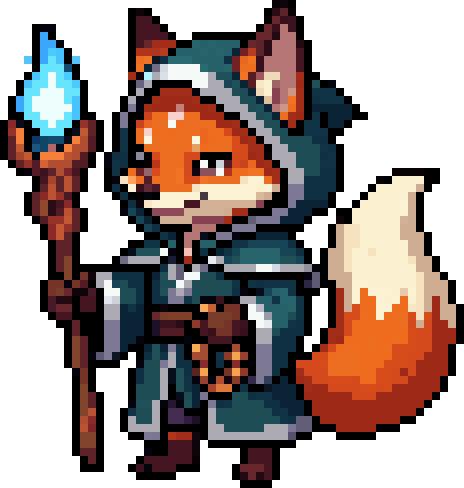
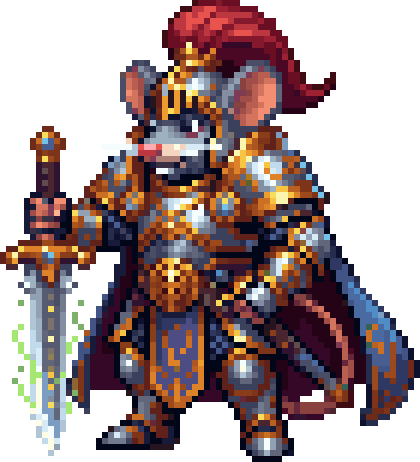
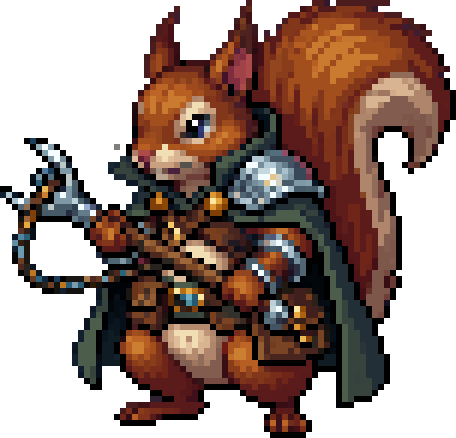
Key artBadger Champion commits to Raging Blows; damage lands as a floating pixel popup.Key art: an Aether steps through a seam, and the trainers below are the only answer.The build's own title screen, v0.11 alpha.Prelude frame: a seam tears open over a city and the street empties.The woodland fort-church — the slice's raidable stronghold.All 23 authored Aethers: eight lines, three forms each, XS to L.The village — first town services, first NPCs who notice you.Mountain road, painted end to end and walked at 2x pixel scale.Cave system where a minor seam has gone unstable.The farm you wake up on, and the last quiet place in the game.Save select: every slot previews its five-Aether party.Battle backdrop: the fort-church grounds at dawn.The road out of the village, where wild gates open.Western spires above the treeline.Inside the fort-church — the stronghold's inner chamber.Battle backdrop: forest floor.Battle backdrop: crystal cave.Battle backdrop: open field.The well clearing, a waypoint between farm and village.North field — where the first Aether wanders in.The farmhouse interior, opening scene of the game.Game icon: a seam torn open.Celestial Wolf — final form of the dawnwolf line.Wyvern — the wyrmling grown into an execute predator.Badger Champion — Rage archetype, front row by design.Dillo Guardian — the only Aether that can reach a fourth defence stage.Vixen Mage — Mana archetype, channels fire and ice in alternation.Mouse Lord — Combo archetype, a dance chain that breaks on a miss.Hedgehog Bishop — healer, cleanser, and the game's only death-prevention.Squirrel Warden — marks a target that its shots can never miss.
Five people, one hearth, and a continent that will not wait.
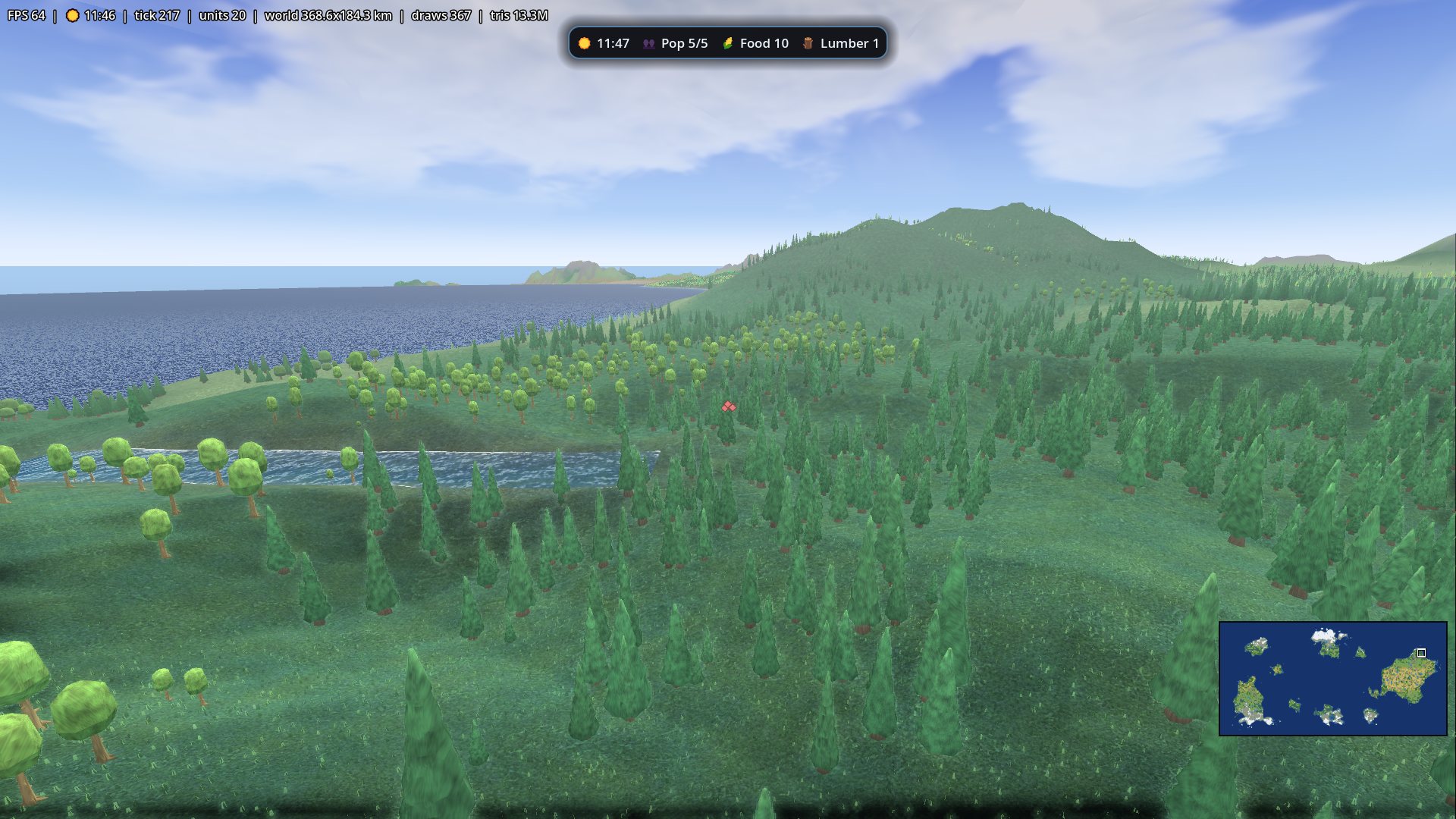
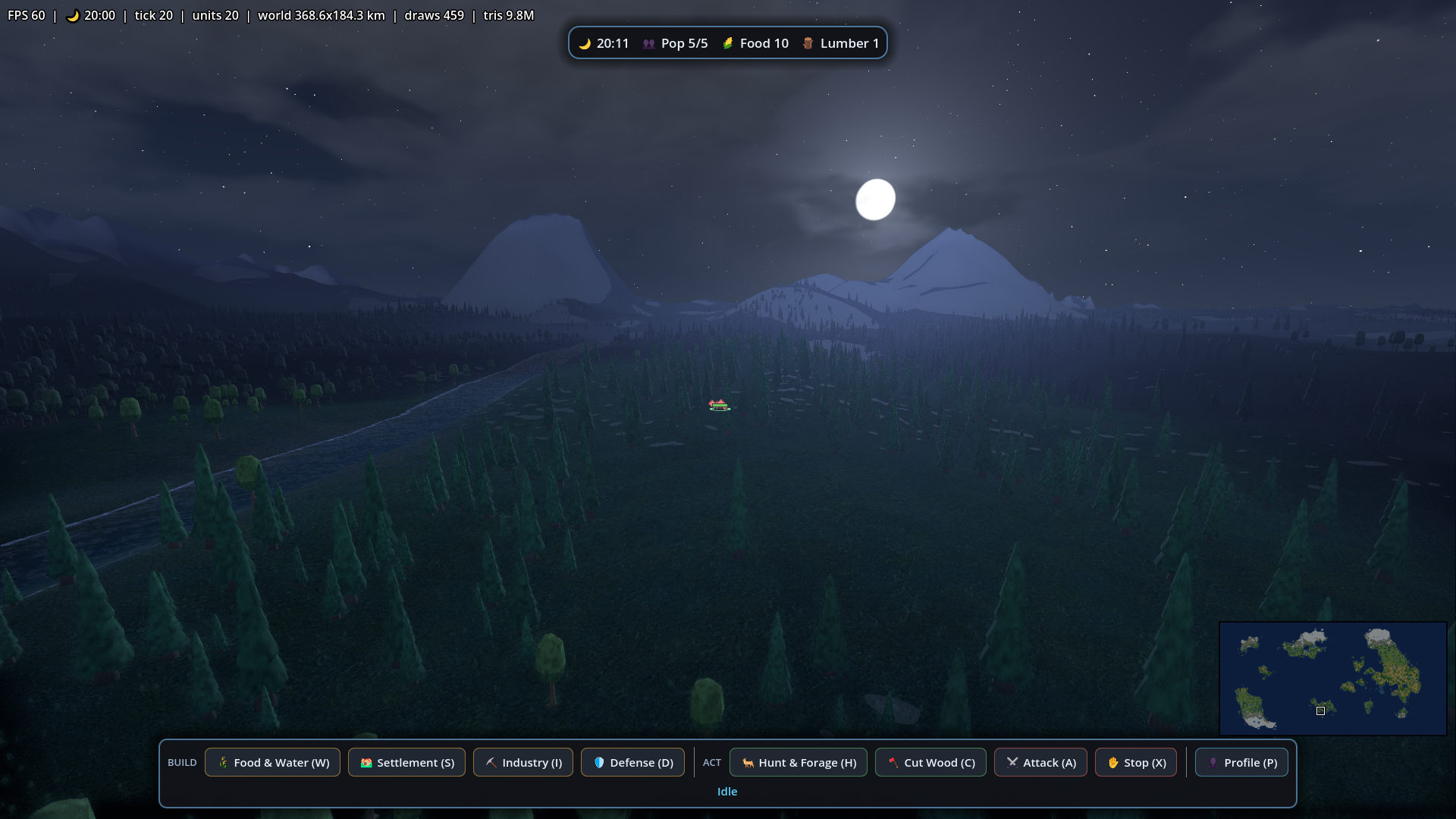
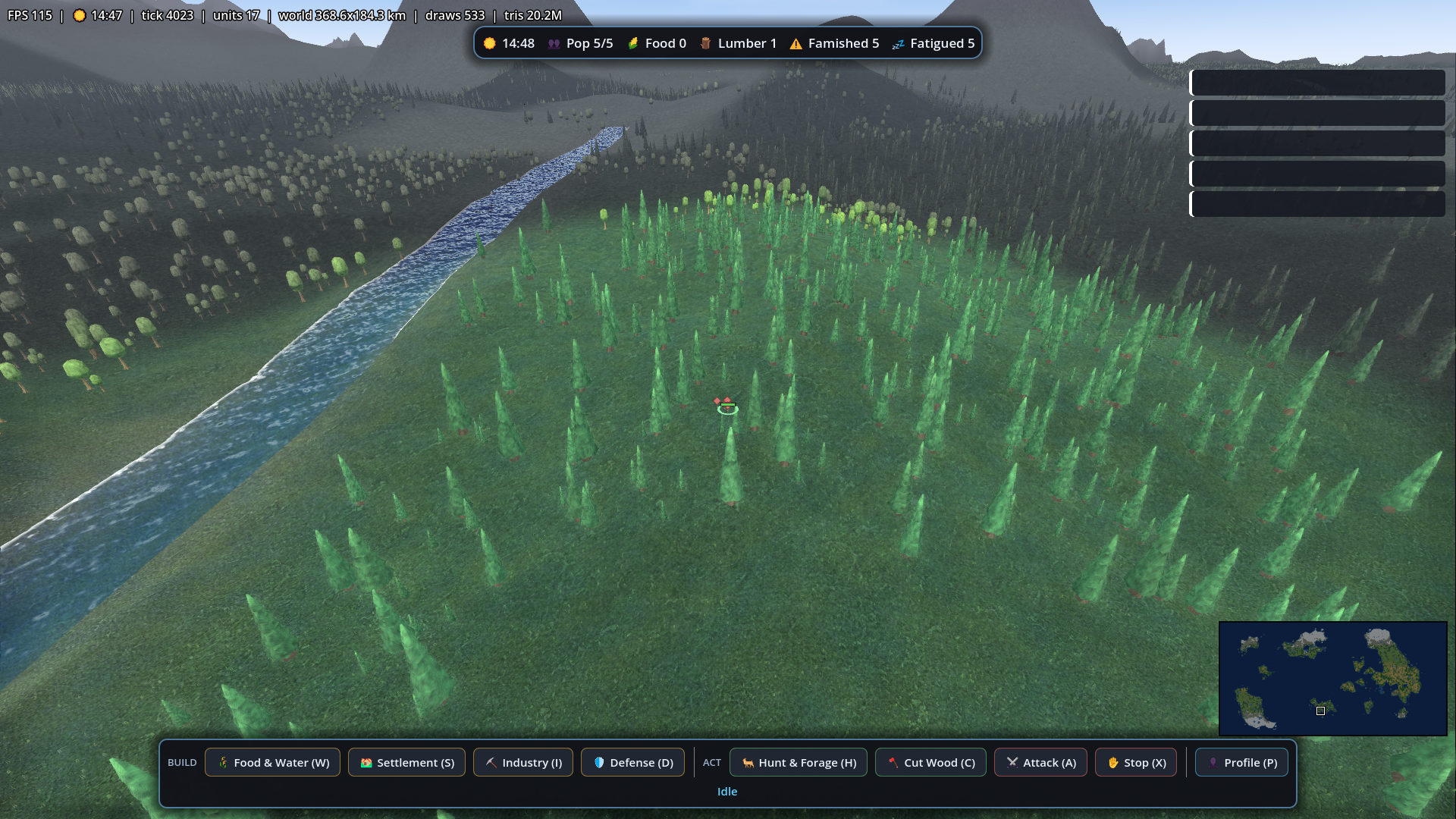
A continuous 3D civilization builder in Godot and C#. Terrain grows from tectonic structure and drainage; settlers clear land, carry water, grow food and advance technology. The playable slice develops the settlement and survival foundation for a larger strategy game.
The AI expertise
Using AI-assisted engineering to tackle interdependent simulation systems, procedural generation and large visual worlds.
Procedural continents · hydrological rivers · settlement and research loops
Terrain with structure
Tectonic continents and rainfall-driven drainage shape mountains, rivers and the settlement opportunities between them.
People do the work
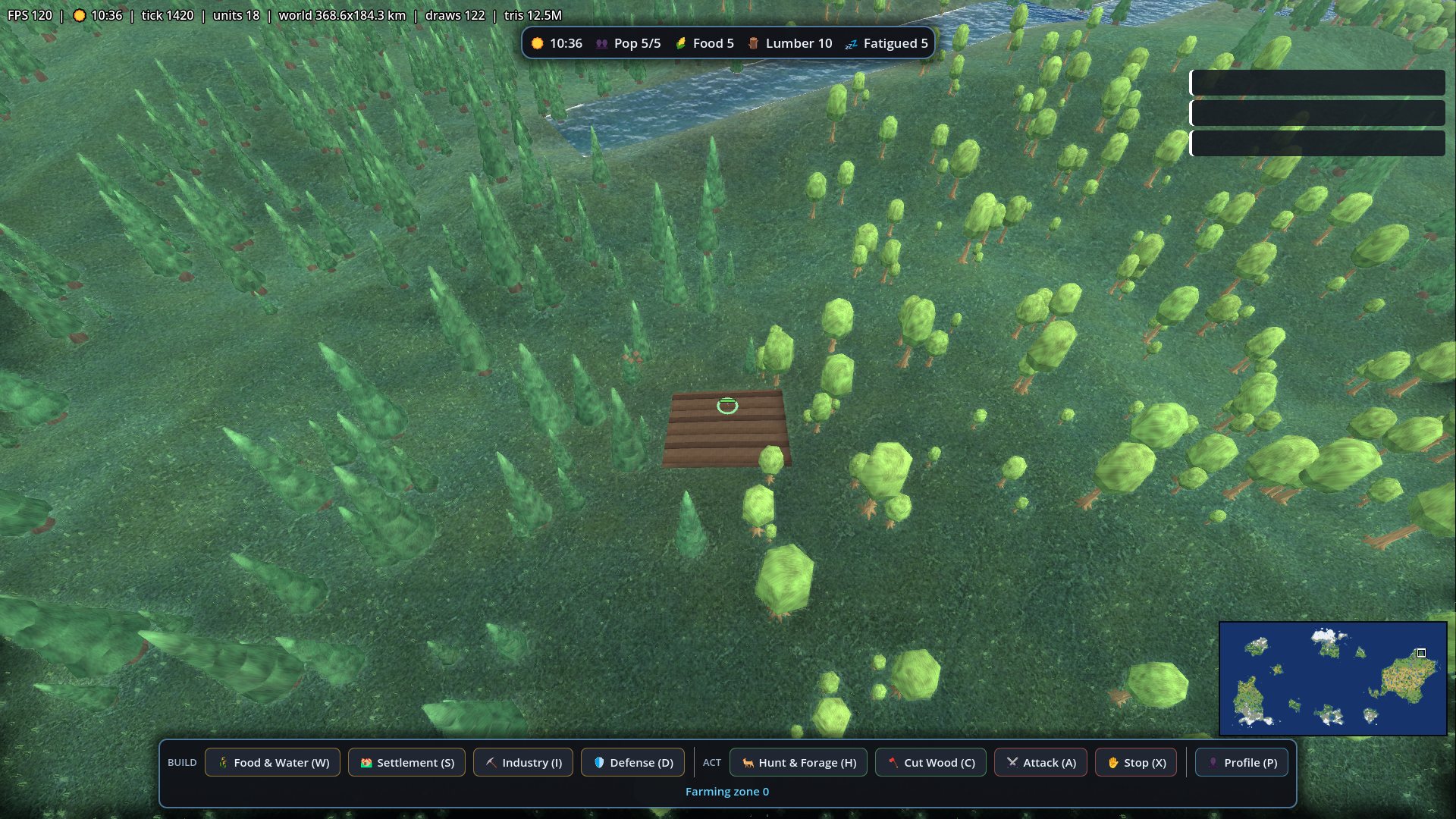
Settlers clear trees, prepare fields, haul water and store food. Survival depends on interacting systems rather than a single resource counter.
Technology opens possibilities
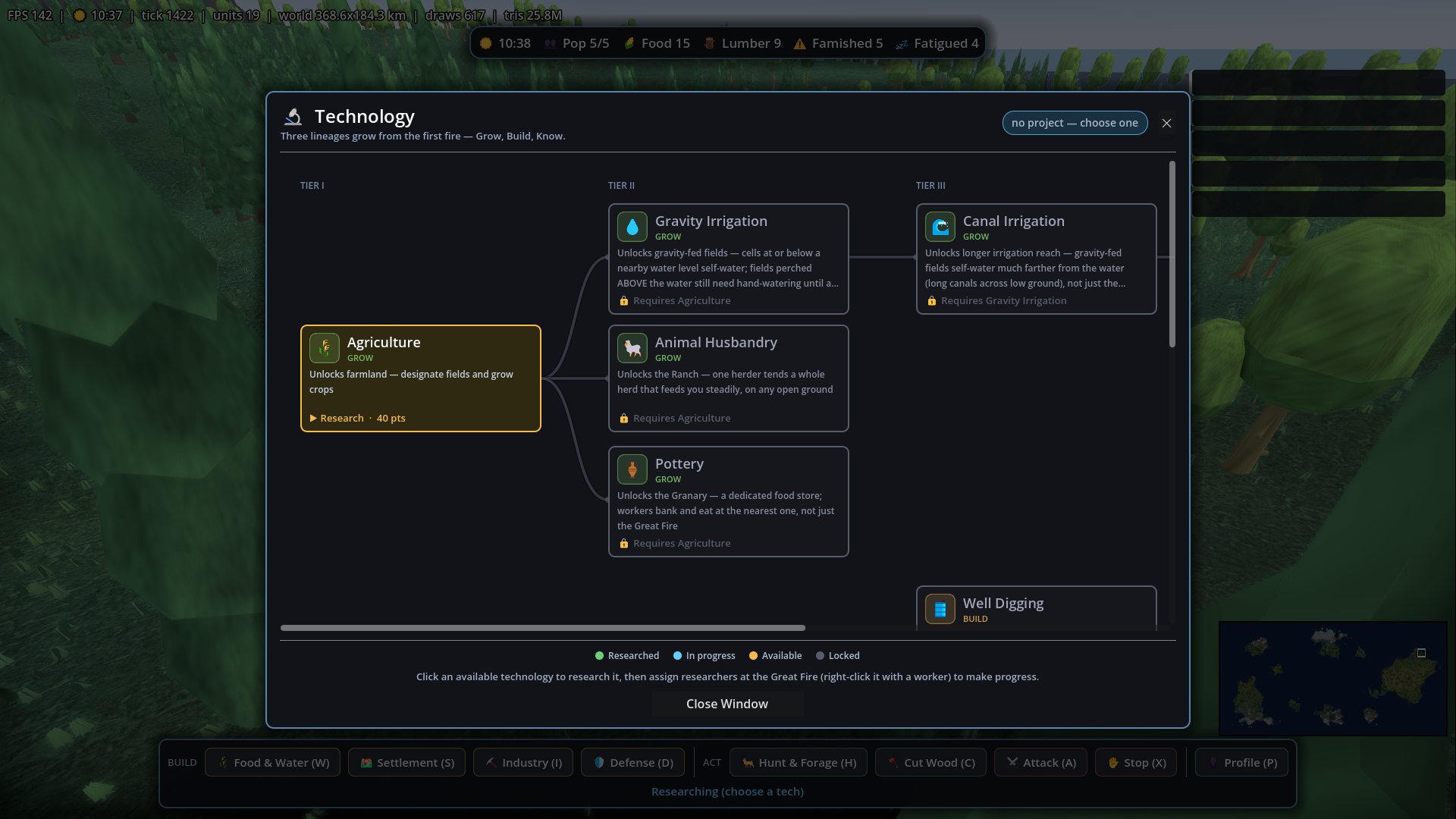
Agriculture, storage, masonry and irrigation unlock new capabilities as a settlement develops.
Project status Playable vertical slice — the settlement, survival and research loops run end to end; large-scale war is designed but not built
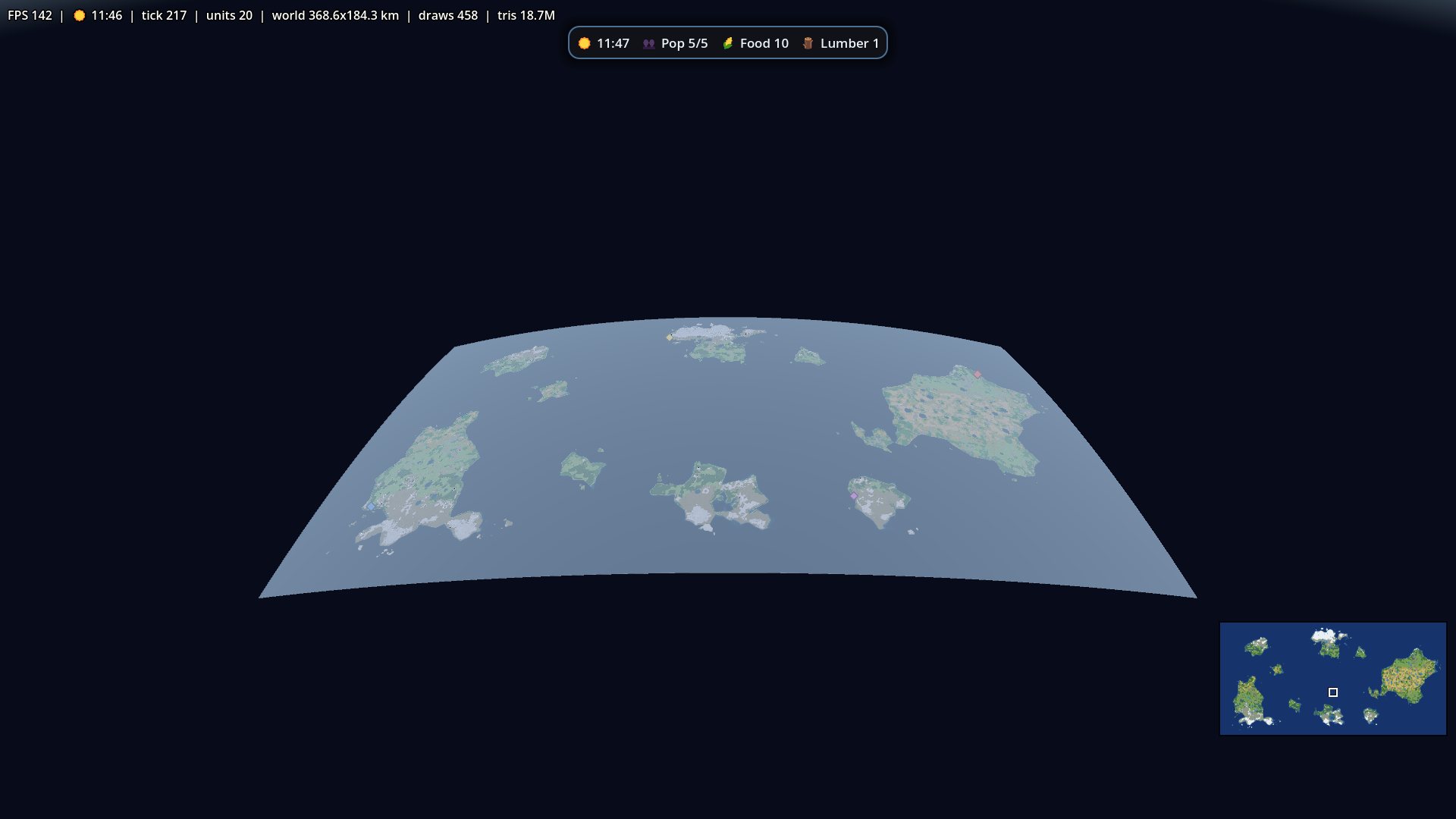
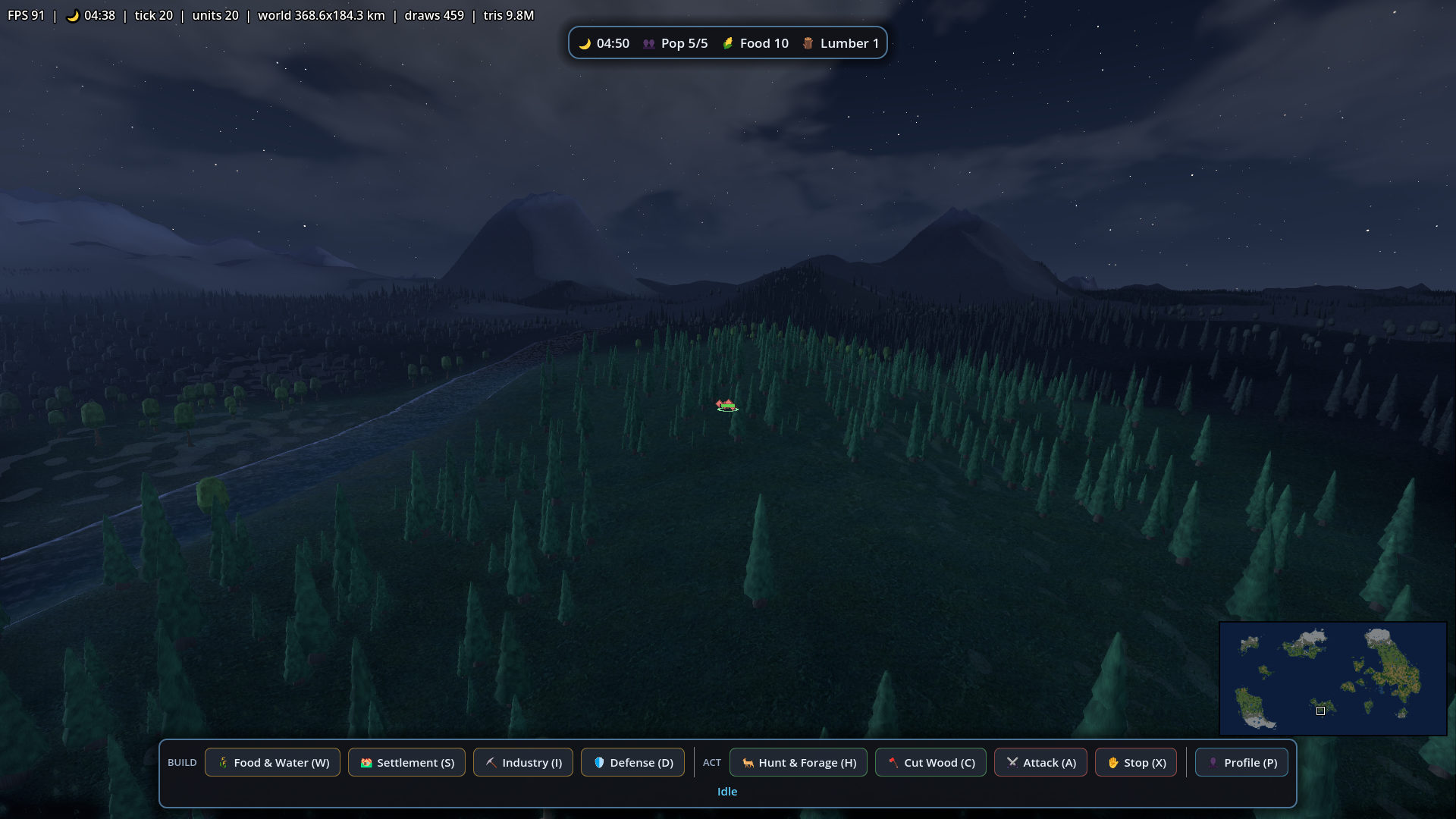
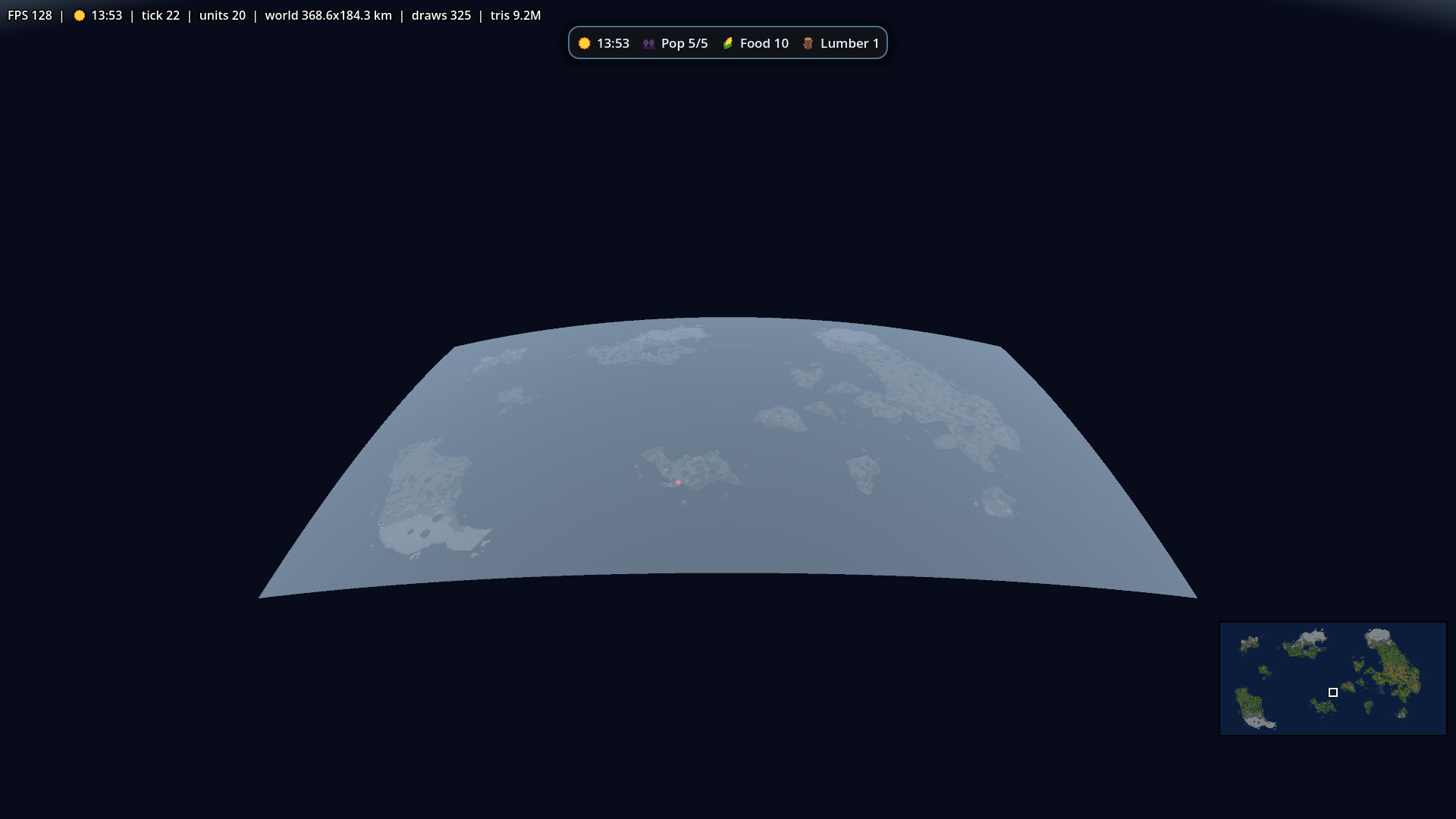
Night is ten percent of the day: moon over snow peaks while the camp sleeps.A trunk river cuts the forest in half — wide enough that nothing walks across it.The whole 368 x 184 km map, curving away under a real horizon.
More from Civica 9 images & clips
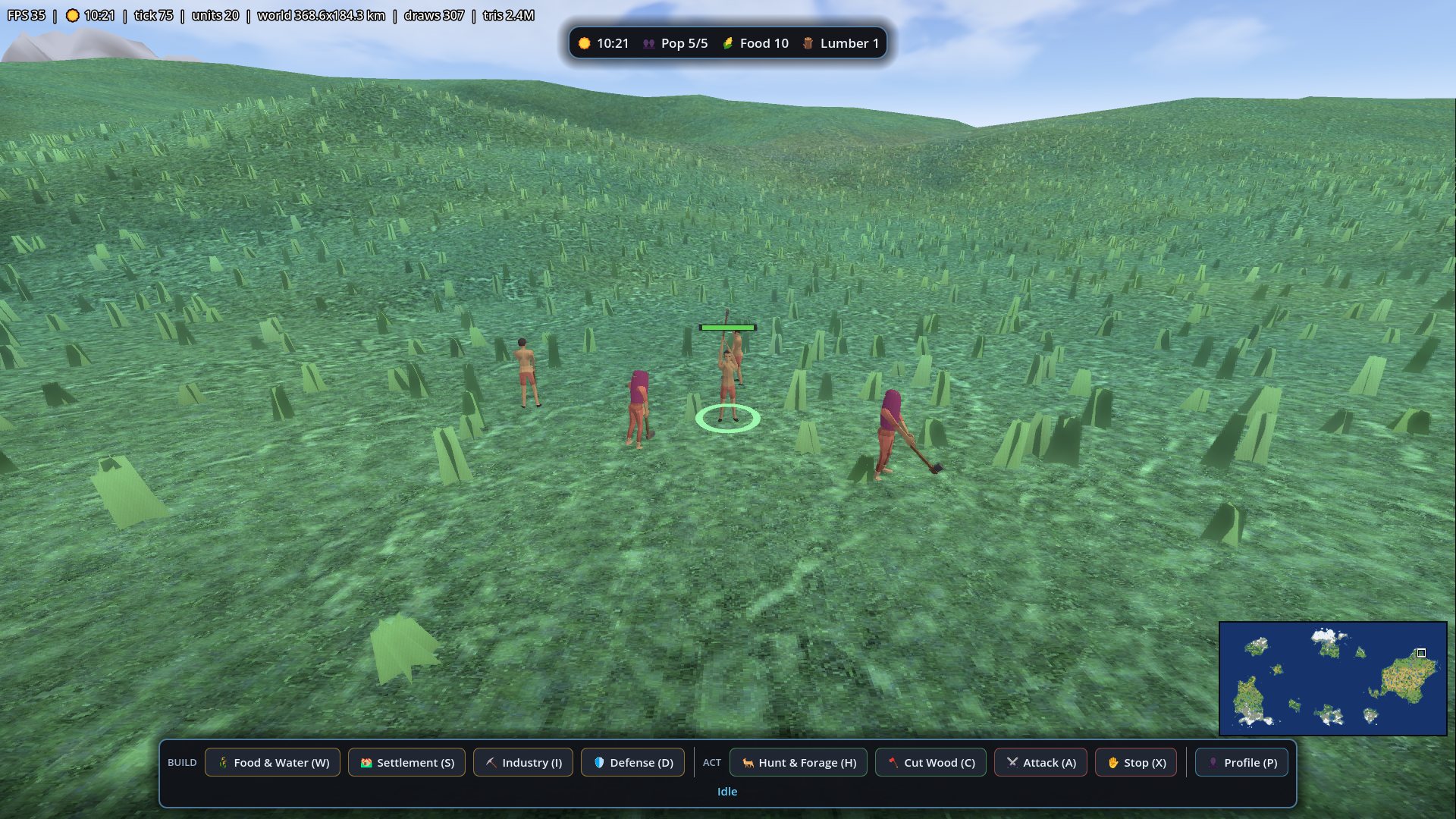
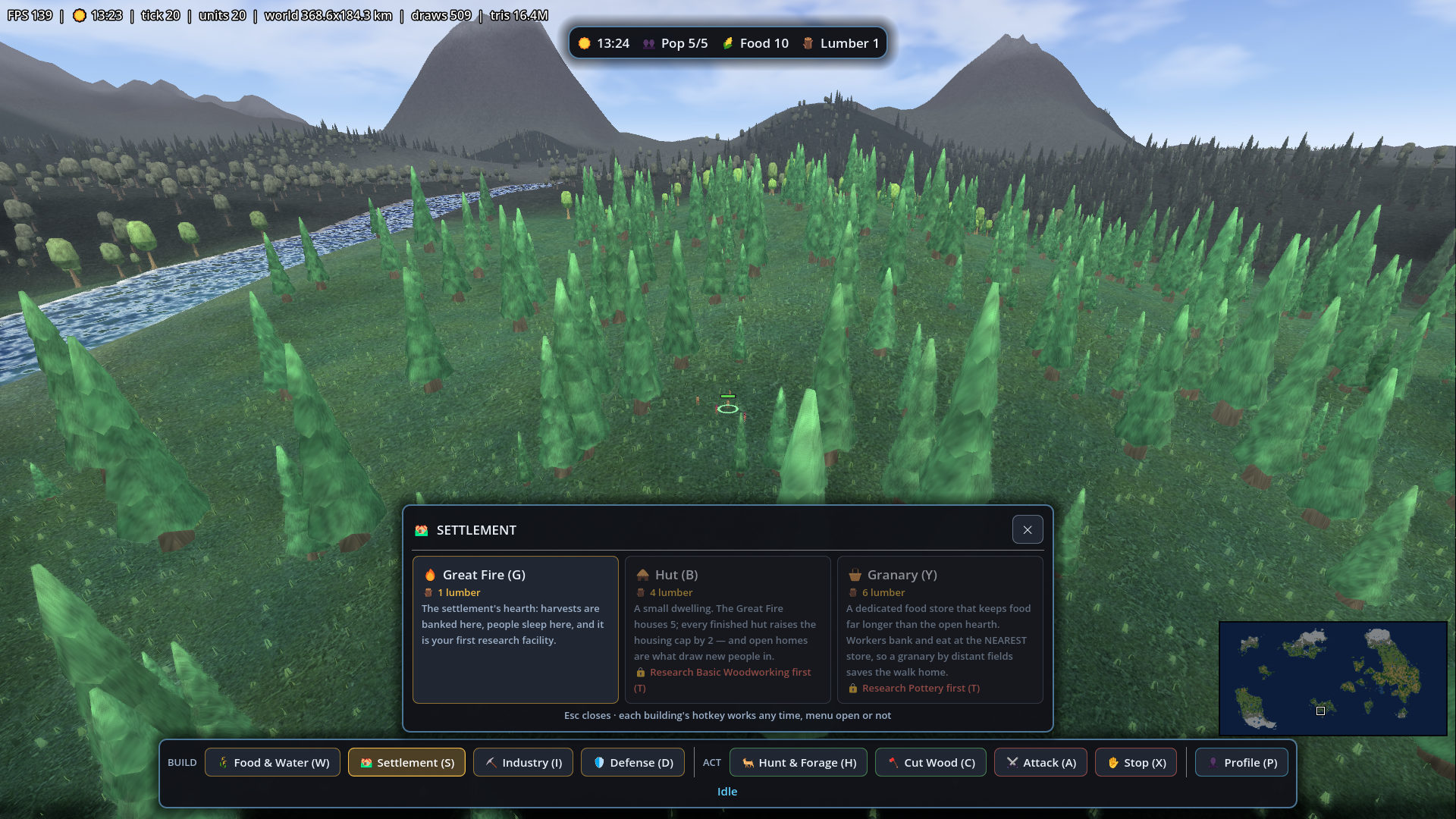
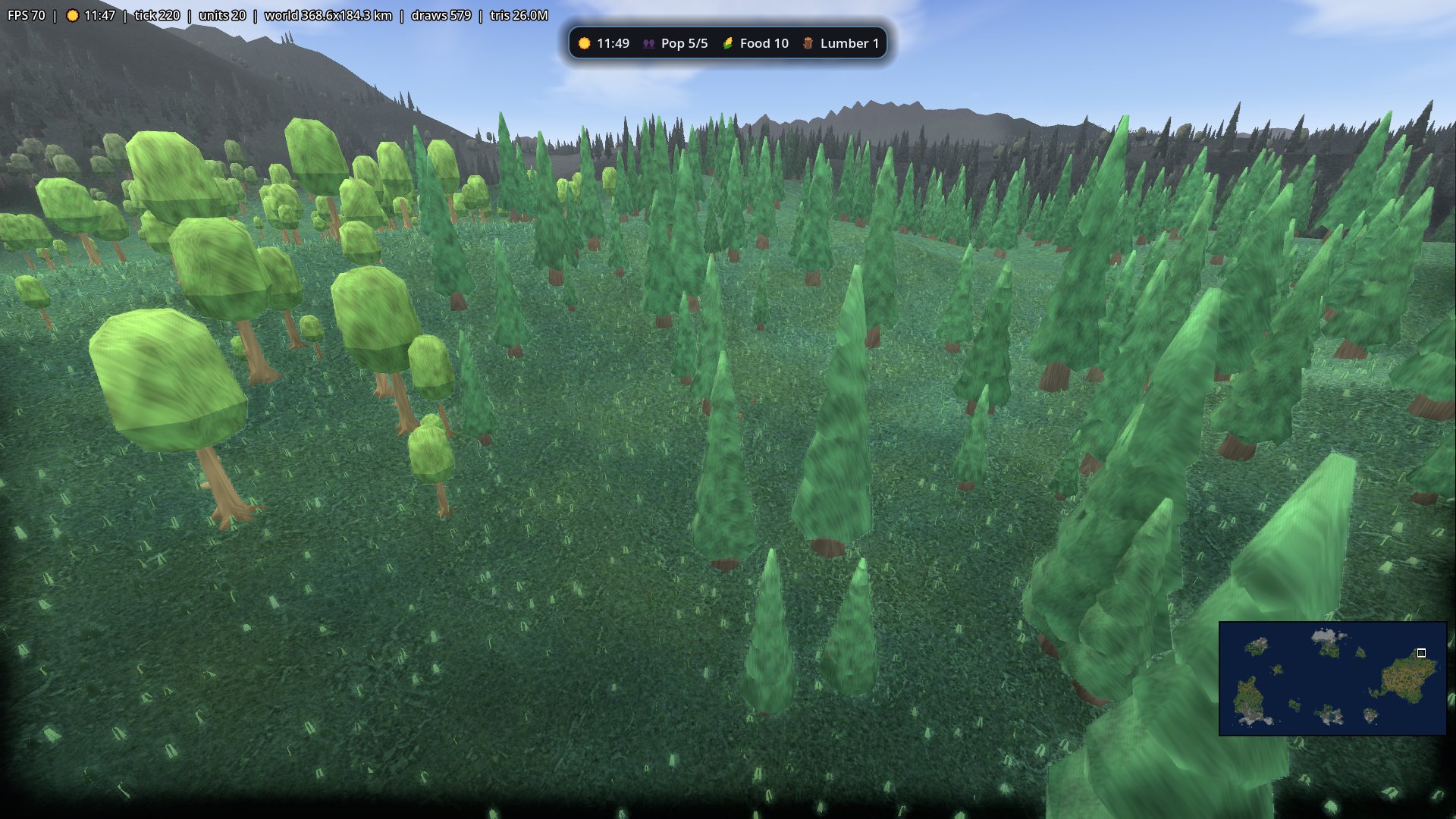
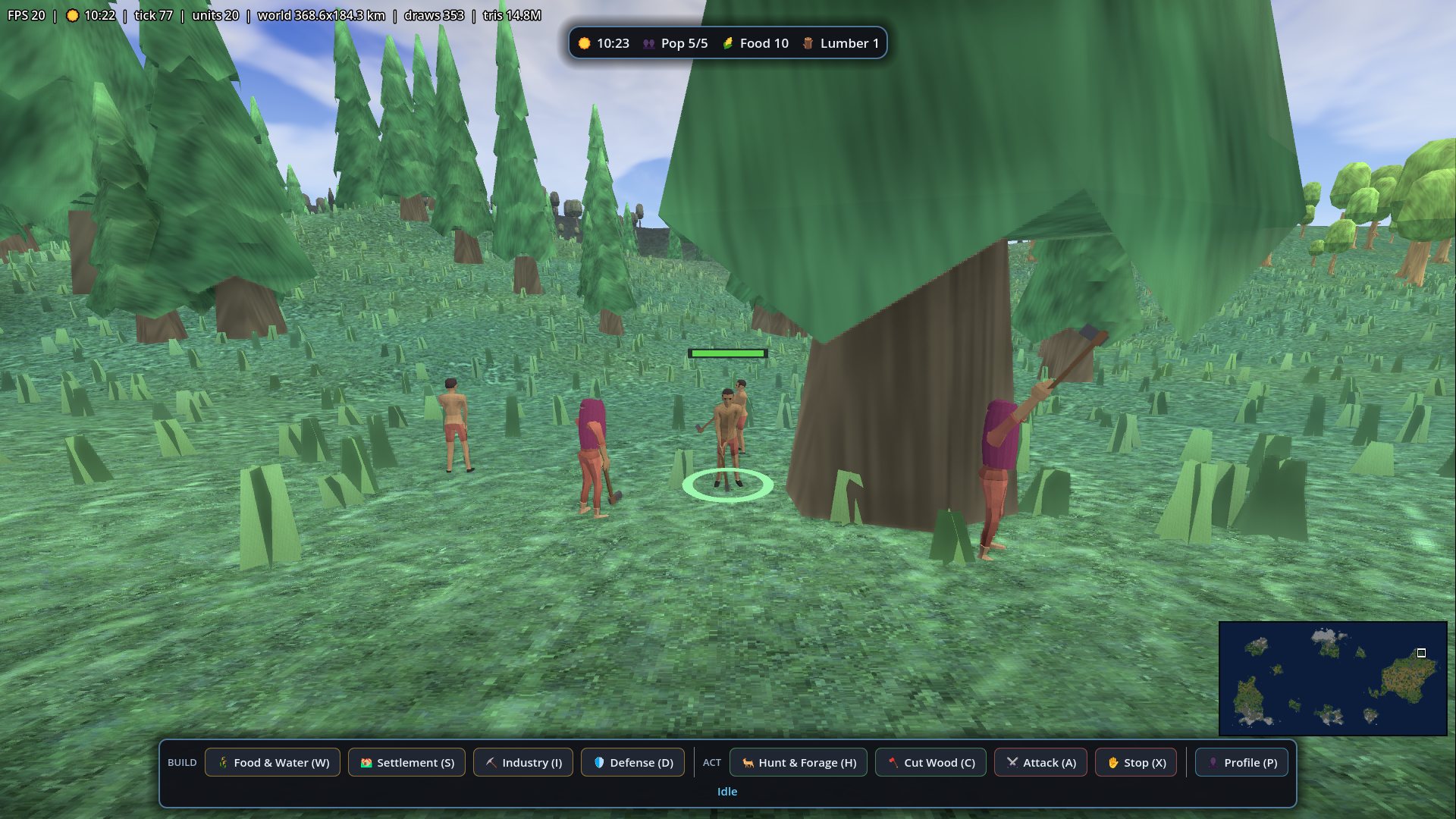
The founding five, axes up — 1.8 m people on a world measured in metres.Three lineages grow from the first fire: Grow, Build, Know.Every building names its cost and, if it is locked, the reason.The first tilled field, cut out of the treeline beside fresh water.Pre-dawn in the valley — crops keep growing while the crew rests.Mixed stands run to the mountains: every tree is a real simulated tree.Felling a trunk takes ten stints of work — and a crew on one tree fells it faster.What you have walked is remembered in grey; the rest of the planet is black.Application icon (transparent PNG).
03 / Built to be used
From the studio to everyday life.
The same approach carries through to practical products and the infrastructure that keeps them running.
08Everyday products
AI-assisted developmentIn daily use
FUBoard
Useful software belongs in everyday life.
An iPad-first family dashboard that merges calendar feeds, shared tasks and weather into one household view. A visual morning checklist adds daily progress, touch-friendly interactions and a clear finish. The result is a focused, self-hosted product with no third-party runtime dependencies.
The AI expertise
AI-assisted product delivery: translating a real household need into a maintained application, from interaction design to reliable hosting.
Read-only Google, Outlook, Apple and generic iCalendar feeds sit alongside shared tasks and weather.
Designed for touch
Swipe navigation, visual checklists and daily progress support a shared family iPad.
Small operational footprint
A dependency-free Node server, private data storage and signed sessions keep the product self-hosted.
Project status Deployed household dashboard. AI assists the development workflow; the board itself does not need a language model to run.
09Inference infrastructure
Local inferencePackaged service
FuServer
Local inference, shared across the studio.
FuServer separates the machine running inference from the computer where the work happens. A packaged Windows service supplies a shared local model, and FuCode clients with the same fleet key discover it automatically.
The AI expertise
Understanding the operational layer of local AI: model hosting, client/server separation, machine resources and deployment.
System architecture
01FuCode clients
02Local discovery
03FuServer inference
Automatic discovery · shared local model · independent service controls
Inference as infrastructure
Keep model serving separate from the developer’s working machine.
Discoverable by clients
Matching fleet keys let FuCode clients find the service without configuring each endpoint manually.
Project status Packaged Windows service. Serving can be enabled or disabled independently of the clients.